
South African / Fusion
Rooibos Chai
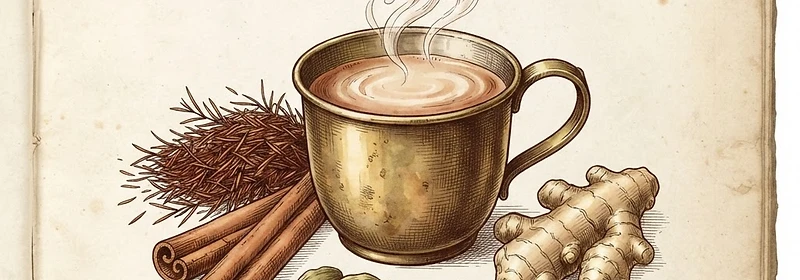
A caffeine-free spiced chai built on rooibos — South African red tea simmered with classic chai spices (cinnamon, cardamom, clove, ginger, black pepper) and milk.
Historical Background
Rooibos chai fuses South African rooibos with Indian masala chai spices — a caffeine-free evening alternative that became popular in cafés worldwide in the late 20th century as demand for caffeine-free chai grew.
Traditional purpose: Caffeine-free spiced evening comfort
Preparation
- 1
In a saucepan, simmer water with all spices for 2–3 minutes.
- 2
Add rooibos and milk; return to a gentle simmer (do not boil over).
- 3
Simmer 5–7 minutes until rich and aromatic.
- 4
Strain into cups and sweeten to taste; serve hot.
Serving: Serve hot in mugs; a cozy caffeine-free evening chai.
Substitutions
- Oat milk for a vegan chai
- Honey for sweetening
Storage
Best fresh; store spices whole and grind as needed.
Safety Notices
Caffeine-free and generally very safe; use Ceylon cinnamon if consumed regularly (cassia coumarin). Ginger may interact with anticoagulants. Educational use only — not medical advice.