

Piper nigrum
Black Pepper
Piperaceae
Identity
- Common Name
- Black Pepper
- Scientific Name
- Piper nigrum
- Botanical Family
- Piperaceae
- Native Region
- Malabar coast, India
- Cultivation Regions
- India, Vietnam, Indonesia, Brazil
- Plant Parts Used
- Fruit (peppercorns)
- Synonyms
- Peppercorn, Maricha, King of Spices
- Caffeine Level
- Caffeine Free
A climbing woody vine with alternate heart-shaped leaves and long pendant spikes of round berries that ripen from green to red then black; the dried unripe berries are black peppercorns.
Historical Background
Native to the Malabar coast of India, black pepper was among the most valuable commodities of antiquity and drove centuries of spice trade. In Ayurveda it is a warming digestive and a 'bioenhancer' (yogavahi) believed to carry other herbs deeper into the body — a concept now linked to piperine's effects on drug absorption.
Earliest recorded uses: Ancient Indian (Ayurveda) and Chinese use; one of the oldest traded spices; called 'king of spices.'
Traditional preparations:
- Cracked peppercorn infusion
- Trikatu (with ginger & long pepper)
- Spiced decoction
Traditional Uses
These uses document historical traditions and do not imply proven effectiveness.
Ayurveda
Warming digestive, bioenhancer (yogavahi) carrying other herbs into tissues.
Traditional Chinese Medicine
Warming Qi-moving spice for digestion and cold patterns.
Modern Herbalism
Digestive and circulatory warming spice in blends.
Flavor & Aroma
Aroma: Pungent, sharp, warm, woody
Tea Information
Safety & Cautions
Research Summary
Black pepper has a long tradition as a warming digestive and 'bioenhancer.' Piperine is well documented to increase absorption of some drugs and supplements, which can be clinically significant. Evidence for pepper's traditional tea uses is limited; it is not a treatment for disease.
Evidence levels reflect the currently available scientific literature and may change as new research emerges. Where evidence is limited or conflicting, this is stated plainly.
References & Sources
Related Herbs


Syzygium aromaticum
Clove
Myrtaceae
Warm, pungent, sweet-spicy, woody

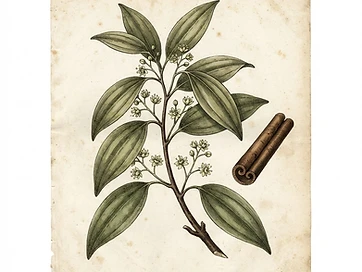
Cinnamomum verum
Cinnamon
Lauraceae
Sweet, warm, woody-spicy


Alpinia galanga
Galangal
Zingiberaceae
Sharp, camphoraceous, gingery