


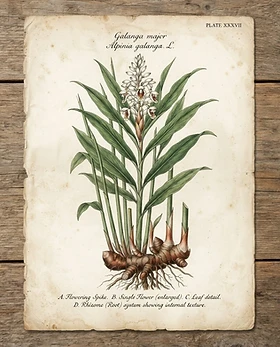
Alpinia galanga
Galangal
Zingiberaceae
Identity
- Common Name
- Galangal
- Scientific Name
- Alpinia galanga
- Botanical Family
- Zingiberaceae
- Native Region
- Southeast Asia
- Cultivation Regions
- Southeast Asia, India, Tropics
- Plant Parts Used
- Rhizome
- Synonyms
- Greater Galangal, Siamese Ginger, Galanga
- Caffeine Level
- Caffeine Free
A robust ginger relative with tall lance-shaped leaves, a spike of orchid-like white flowers streaked with red, and a knobby reddish-brown aromatic rhizome used as a spice and medicine.
Historical Background
Galangal has been prized in Ayurveda, TCM, and Southeast Asian cooking for centuries as a warming carminative and digestive stimulant, and to settle nausea.
Earliest recorded uses: Indigestion, nausea, cold chest, and as a warming aromatic tonic.
Cultural significance: Central to Thai and Indonesian cuisine (tom kha, rendang) and to traditional Ayurvedic and Unani digestives.
Classical
Ayurvedic and Arab physicians use galangal as a carminative and stimulant.
Medieval
Imported into Europe as 'galangal' in spice-medicine trade.
Traditional preparations:
- Decoction of sliced rhizome
- Infusion
- Spice in food
Traditional Uses
These uses document historical traditions and do not imply proven effectiveness.
Ayurveda
Warming decoction for poor digestion, gas, nausea, and chest colds.
Traditional Chinese Medicine
Used to warm the middle and move stagnant qi.
Flavor & Aroma
Aroma: Sharp, camphoraceous, gingery
Tea Information
Safety & Cautions
Research Summary
Essential oils and diarylheptanoids are the focus of laboratory study; clinical evidence for digestive and respiratory effects is limited.
Evidence levels reflect the currently available scientific literature and may change as new research emerges. Where evidence is limited or conflicting, this is stated plainly.
References & Sources
References & Sources
- WHO · WHO Monographs on Selected Medicinal Plants (various)
Related Herbs

Zingiber officinale
Ginger
Zingiberaceae
Warm, pungent, citrusy-spicy.


Curcuma longa
Turmeric
Zingiberaceae
Warm, earthy, slightly musky


Syzygium aromaticum
Clove
Myrtaceae
Warm, pungent, sweet-spicy, woody