
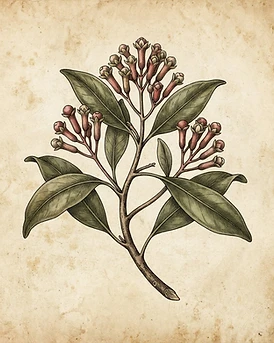
Syzygium aromaticum
Clove
Myrtaceae
Identity
- Common Name
- Clove
- Scientific Name
- Syzygium aromaticum
- Botanical Family
- Myrtaceae
- Native Region
- Moluccas, Indonesia
- Cultivation Regions
- Indonesia, Madagascar, Tanzania, Sri Lanka, India
- Plant Parts Used
- Flower buds
- Synonyms
- Caryophyllus, Laung, Kanful
- Caffeine Level
- Caffeine Free
An evergreen tree 10-20 m tall with leathery opposite oval leaves and terminal clusters of nail-shaped flower buds with four fleshy calyx lobes crowned by a pale pink unopened ball of petals. The dried unopened buds are the familiar clove spice.
Historical Background
Native to the Moluccas (the Spice Islands of Indonesia), cloves were among the most coveted spices of the ancient and medieval world, driving centuries of trade and empire. In Ayurveda, TCM, and Middle Eastern medicine, clove tea and oil were used for toothache, digestive complaints, and as a warming stimulant.
Earliest recorded uses: Used in Chinese and Indian medicine for over 2,000 years; traded to Europe via the spice islands.
Traditional preparations:
- Bud infusion
- Spiced chai ingredient
- Gargle
Traditional Uses
These uses document historical traditions and do not imply proven effectiveness.
Ayurveda
Warming digestive and toothache remedy (topical oil).
Middle Eastern Traditions
Warming spice for digestion and cold-season teas.
Modern Herbalism
Digestive and warming chai spice.
Flavor & Aroma
Aroma: Warm, pungent, sweet-spicy, woody
Tea Information
Safety & Cautions
Research Summary
Clove has a long tradition as a warming digestive and topical analgesic. Laboratory studies show antimicrobial and antioxidant activity (chiefly eugenol), but clinical trials are limited. It is not a treatment for infection or pain; clove oil should not be ingested.
Evidence levels reflect the currently available scientific literature and may change as new research emerges. Where evidence is limited or conflicting, this is stated plainly.
References & Sources
Related Herbs

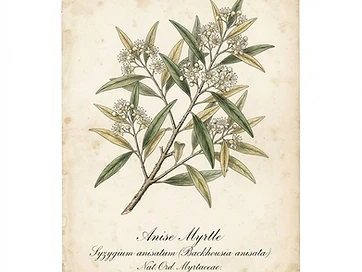
Syzygium anisatum
Anise Myrtle
Myrtaceae
Sweet anise-licorice, fresh, warm


Piper nigrum
Black Pepper
Piperaceae
Pungent, sharp, warm, woody


Alpinia galanga
Galangal
Zingiberaceae
Sharp, camphoraceous, gingery