
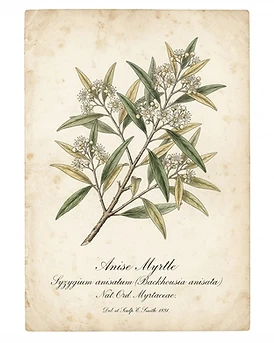
Syzygium anisatum
Anise Myrtle
Myrtaceae
Identity
- Common Name
- Anise Myrtle
- Scientific Name
- Syzygium anisatum
- Botanical Family
- Myrtaceae
- Native Region
- Subtropical eastern Australia
- Cultivation Regions
- Subtropical eastern Australia
- Plant Parts Used
- Leaves
- Synonyms
- Aniseed Myrtle, Ringwood
- Caffeine Level
- Caffeine Free
An evergreen rainforest shrub with lanceolate aromatic leaves high in anethole and small creamy-white starburst flower clusters; the leaves are used.
Historical Background
Anise myrtle has been an Indigenous Australian fragrant bush plant for millennia, its anise-scented leaves brewed as a soothing tea and flavoring. A prized native botanical of subtropical Australia, it offers a sweet, caffeine-free licorice-like cup.
Earliest recorded uses: Indigenous Australian traditions; an anise-scented bush tea and flavoring.
Traditional preparations:
- Leaf infusion
- Anise bush tea
- Culinary flavoring
Traditional Uses
These uses document historical traditions and do not imply proven effectiveness.
Indigenous Australian Traditions
Anise-scented digestive and calming bush tea.
Modern Herbalism
Sweet caffeine-free licorice cup.
Flavor & Aroma
Aroma: Sweet anise-licorice, fresh, warm
Tea Information
Safety & Cautions
Research Summary
Anise myrtle has a tradition as a fragrant digestive and calming tea; preclinical work shows antioxidant and antimicrobial activity from anethole. Clinical evidence is insufficient; it is not a treatment for digestive disorders or any disease, though it remains a sweet, caffeine-free cup.
Evidence levels reflect the currently available scientific literature and may change as new research emerges. Where evidence is limited or conflicting, this is stated plainly.
References & Sources
Related Herbs


Backhousia citriodora
Lemon Myrtle
Myrtaceae
Intensely citrus-lemon, fresh, clean


Syzygium aromaticum
Clove
Myrtaceae
Warm, pungent, sweet-spicy, woody
Myrtus communis
Myrtle
Myrtaceae
Fresh, cineole-rich, subtly floral