
Myrtus communis
Myrtle
Myrtaceae
Identity
- Common Name
- Myrtle
- Scientific Name
- Myrtus communis
- Botanical Family
- Myrtaceae
- Native Region
- Mediterranean basin and western Asia
- Plant Parts Used
- Leaves, Berries
- Caffeine Level
- None
An evergreen shrub with small, glossy, aromatic leaves and white flowers bearing numerous stamens, followed by blue-black berries.
Historical Background
Sacred to Aphrodite and Venus in antiquity, myrtle symbolized love and was woven into bridal wreaths. Mediterranean herbalists used its leaves for coughs and digestion.
Earliest recorded uses: Revered in ancient Greek and Roman rituals; described by Dioscorides and Theophrastus.
Cultural significance: In Sardinia, myrtle berries are infused into a celebrated liqueur, mirto; the plant remains a symbol of love and honor.
Traditional preparations:
- Leaf infusion
- Berry maceration in alcohol
- Steam inhalation
Traditional Uses
These uses document historical traditions and do not imply proven effectiveness.
Mediterranean folk medicine
Leaf infusions used for coughs, sinus congestion, and digestive discomfort.
Culinary (Sardinia)
Berries and leaves infused into mirto liqueur.
Flavor & Aroma
Aroma: Fresh, cineole-rich, subtly floral
Tea Information
Safety & Cautions
Research Summary
Contains 1,8-cineole and tannins with antimicrobial and expectorant properties observed in vitro; clinical evidence is limited.
Evidence levels reflect the currently available scientific literature and may change as new research emerges. Where evidence is limited or conflicting, this is stated plainly.
References & Sources
Related Herbs
Juniperus communis
Juniper Berry
Cupressaceae
Crisp, pine-resin, gin-like


Backhousia citriodora
Lemon Myrtle
Myrtaceae
Intensely citrus-lemon, fresh, clean

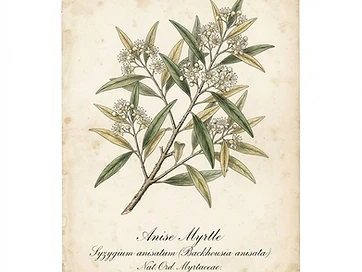
Syzygium anisatum
Anise Myrtle
Myrtaceae
Sweet anise-licorice, fresh, warm