
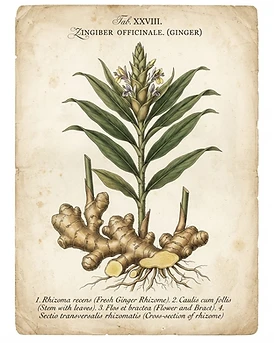
Zingiber officinale
Ginger
Zingiberaceae
Identity
- Common Name
- Ginger
- Scientific Name
- Zingiber officinale
- Botanical Family
- Zingiberaceae
- Native Region
- Southeast Asia
- Cultivation Regions
- India, China, Nigeria, Jamaica, Indonesia
- Plant Parts Used
- Rhizome (root)
- Synonyms
- Ginger root, Stem ginger
- Caffeine Level
- Caffeine Free
A perennial reed-like plant growing about a meter tall, with lance-shaped leaves and cone-like flower spikes. The prized part is the knobby aromatic rhizome (underground stem).
Historical Background
Ginger has been used in Asian and Indian cooking and traditions for over 5,000 years. It reached the Mediterranean via ancient trade routes and was valued in medieval Europe. It remains a cornerstone of Ayurvedic and traditional Chinese practices.
Earliest recorded uses: Recorded in ancient Chinese and Sanskrit (Ayurvedic) texts.
Cultural significance: A foundational spice in Ayurveda and Traditional Chinese Medicine, symbolizing warmth and vitality. A global kitchen staple.
Antiquity
Used in India and China for thousands of years.
Medieval Europe
Imported as a prized spice along trade routes.
Modern
Among the most studied culinary herbs.
Traditional preparations:
- Decoction of fresh or dried rhizome
- Infusion with honey and lemon
- Cold brew
Traditional Uses
These uses document historical traditions and do not imply proven effectiveness.
Ayurveda
Considered a warming herb used to support digestion and soothe the stomach.
Traditional Chinese Medicine
Used to warm the body and support digestion and circulation.
Traditional European Herbalism
Ginger tea used as a comforting winter drink and for travel comfort.
Flavor & Aroma
Aroma: Warm, pungent, citrusy-spicy.
Tea Information
Safety & Cautions
Research Summary
Evidence supports ginger for reducing nausea in some contexts (e.g., pregnancy-associated nausea has moderate support). Evidence for other uses is mixed or limited.
Evidence levels reflect the currently available scientific literature and may change as new research emerges. Where evidence is limited or conflicting, this is stated plainly.
References & Sources
Related Herbs


Alpinia galanga
Galangal
Zingiberaceae
Sharp, camphoraceous, gingery


Glycyrrhiza glabra
Licorice Root
Fabaceae
Sweet, woody, anise-like

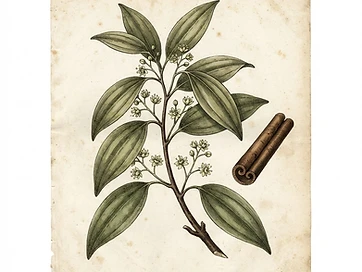
Cinnamomum verum
Cinnamon
Lauraceae
Sweet, warm, woody-spicy