

Glycyrrhiza glabra
Licorice Root
Fabaceae
Identity
- Common Name
- Licorice Root
- Scientific Name
- Glycyrrhiza glabra
- Botanical Family
- Fabaceae
- Native Region
- Southern Europe, Middle East, central Asia
- Cultivation Regions
- Mediterranean, Middle East, China
- Plant Parts Used
- Root (stolon)
- Synonyms
- Liquorice, Sweet Root
- Caffeine Level
- Caffeine Free
A perennial 1–1.5 m tall with pinnate leaves, pale lilac pea-like flowers, and a long, deeply penetrating taproot that is intensely sweet from glycyrrhizin. The root is the medicinal part.
Historical Background
Licorice root has been used for over 3,000 years, appearing in Assyrian, Egyptian, Greek, and Chinese medicine. It was a standard demulcent and expectorant in European and Ayurvedic practice and remains a common ingredient in cough syrups and traditional Chinese formulas. Its sweetness once flavored candies that still bear its name.
Earliest recorded uses: Assyrian tablets and the Egyptian Ebers Papyrus (~1550 BCE); Dioscorides describes it for thirst and chest complaints.
Cultural significance: Licorice exemplifies the global exchange of medicinal roots — from Egyptian and Greek medicine to Chinese and Ayurvedic harmonizing formulas; its name lives on in the familiar confection.
Traditional preparations:
- Root decoction
- Syrup and lozenges
- Powder in formulas
Traditional Uses
These uses document historical traditions and do not imply proven effectiveness.
Traditional European Herbalism
Soothing tea for cough, sore throat, and stomach ulcers.
Traditional Chinese Medicine
Harmonizes formulas, moistens lung, clears heat, soothes the throat.
Ayurveda
Rejuvenative for voice, throat, and respiratory comfort.
Flavor & Aroma
Aroma: Sweet, woody, anise-like
Tea Information
Safety & Cautions
Research Summary
Licorice root has demulcent and expectorant effects supported by long traditional use; a few trials support its use as part of combination products for upper respiratory and digestive symptoms. Glycyrrhizin can raise blood pressure and lower potassium with prolonged or high-dose use. Licorice is not a treatment for ulcers, cough, or adrenal conditions on its own.
Evidence levels reflect the currently available scientific literature and may change as new research emerges. Where evidence is limited or conflicting, this is stated plainly.
References & Sources
Related Herbs

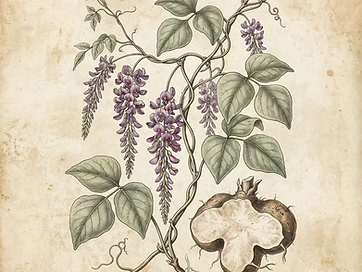
Pueraria lobata
Kudzu
Fabaceae
Sweet, starchy, slightly floral, earthy


Mucuna pruriens
Mucuna
Fabaceae
Earthy, nutty, slightly bitter


Astragalus membranaceus
Astragalus
Fabaceae
Sweet, earthy, bean-like, mild