
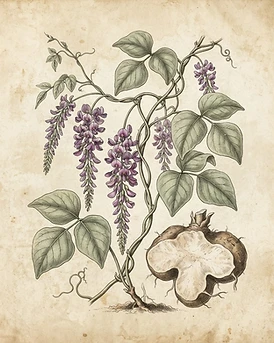
Pueraria lobata
Kudzu
Fabaceae
Identity
- Common Name
- Kudzu
- Scientific Name
- Pueraria lobata
- Botanical Family
- Fabaceae
- Native Region
- East Asia (China, Japan, Korea)
- Cultivation Regions
- China, Japan, Southeast Asia, United States (invasive)
- Plant Parts Used
- Root, Flowers
- Synonyms
- Ge Gen, Kuzu, Japanese Arrowroot
- Caffeine Level
- Caffeine Free
A vigorous climbing vine with large trifoliate leaves of three broad lobed leaflets, long pendant clusters of purple-violet pea-like flowers, and a large starchy tuberous root used in food and medicine.
Historical Background
Kudzu (ge gen) has been used in Traditional Chinese Medicine for over two millennia to release muscle tension and clear heat, and its starchy root is also a food. In the American South it became a notorious invasive, but its root tea remains a respected remedy in East Asian herbalism.
Earliest recorded uses: Recorded in the Shennong Ben Cao Jing (~2000 years ago); a classic TCM cold-and-alcohol tonic.
Traditional preparations:
- Root decoction
- Ginger-kudzu tea
- Congee thickener
Traditional Uses
These uses document historical traditions and do not imply proven effectiveness.
Traditional Chinese Medicine
Releases muscle tension, generates fluids, clears heat; classic cold and alcohol tonic.
Modern Herbalism
Relaxation and digestive root tea.
Flavor & Aroma
Aroma: Sweet, starchy, slightly floral, earthy
Tea Information
Safety & Cautions
Research Summary
Kudzu has a long TCM tradition for tension, digestion, and alcohol-craving support. Clinical evidence is limited; small trials give mixed results for alcohol use and cardiovascular effects, and it is not a treatment for addiction, cardiovascular disease, or any condition.
Evidence levels reflect the currently available scientific literature and may change as new research emerges. Where evidence is limited or conflicting, this is stated plainly.
References & Sources
Related Herbs


Astragalus membranaceus
Astragalus
Fabaceae
Sweet, earthy, bean-like, mild


Glycyrrhiza glabra
Licorice Root
Fabaceae
Sweet, woody, anise-like


Aspalathus linearis
Rooibos
Fabaceae
Warm, honeyed, slightly smoky.