

Mucuna pruriens
Mucuna
Fabaceae
Identity
- Common Name
- Mucuna
- Scientific Name
- Mucuna pruriens
- Botanical Family
- Fabaceae
- Native Region
- India and tropical Africa/Asia
- Cultivation Regions
- India, Africa, Caribbean, tropics
- Plant Parts Used
- Seeds
- Synonyms
- Kapikacchu, Velvet Bean, Cowhage
- Caffeine Level
- Caffeine Free
A climbing tropical vine with trifoliate leaves of broad oval leaflets, pendant clusters of purple-violet pea-like flowers, and long tassel-like pods covered in dense itchy orange-brown hairs; the seeds are the part used.
Historical Background
Mucuna (kapikacchu, 'velvet bean') has been used in Ayurveda for centuries as a nervine and vitality seed, prized for its natural L-dopa content. Its itchy-haired pods are a curiosity of tropical gardens, and the seeds are traditionally brewed into tonic preparations.
Earliest recorded uses: Ayurvedic medicine for centuries; a revered nervine and vitality seed (kapikacchu), naturally rich in L-dopa.
Traditional preparations:
- Seed decoction
- Vitality tonic with ashwagandha
- Ayurvedic nervine blend
Traditional Uses
These uses document historical traditions and do not imply proven effectiveness.
Ayurveda
Nervine, vitality, and mood tonic; naturally L-dopa-rich seed.
Modern Herbalism
Vitality and nervine tonic (with serious drug interactions).
Flavor & Aroma
Aroma: Earthy, nutty, slightly bitter
Tea Information
Safety & Cautions
Research Summary
Mucuna is naturally rich in L-dopa and has a tradition as a nervine and vitality seed. Clinical evidence is limited; it has serious interactions with Parkinson's and psychiatric medications. It is not a treatment for Parkinson's, depression, or any disease and should be used only with clinician oversight.
Evidence levels reflect the currently available scientific literature and may change as new research emerges. Where evidence is limited or conflicting, this is stated plainly.
References & Sources
Related Herbs

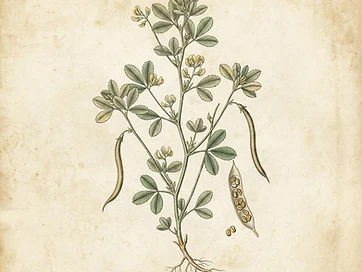
Trigonella foenum-graecum
Fenugreek
Fabaceae
Maple-like, nutty, bittersweet, earthy


Glycyrrhiza glabra
Licorice Root
Fabaceae
Sweet, woody, anise-like


Aspalathus linearis
Rooibos
Fabaceae
Warm, honeyed, slightly smoky.