
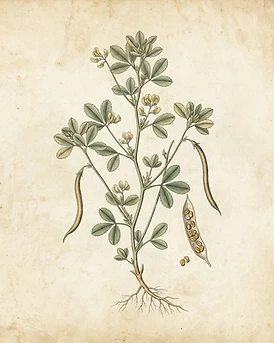
Trigonella foenum-graecum
Fenugreek
Fabaceae
Identity
- Common Name
- Fenugreek
- Scientific Name
- Trigonella foenum-graecum
- Botanical Family
- Fabaceae
- Native Region
- India and the Mediterranean
- Cultivation Regions
- India, Middle East, Mediterranean, North Africa
- Plant Parts Used
- Seeds, Leaves
- Synonyms
- Methi, Greek Hay, Fenigreek
- Caffeine Level
- Caffeine Free
An erect annual 30-80 cm tall with trifoliate leaves of three toothed leaflets, small pale yellow pea-like flowers, and long slender curved pods containing small golden-brown angular seeds; the seeds are the part used.
Historical Background
Fenugreek has been cultivated since antiquity across Egypt, India, and the Mediterranean as both a culinary spice and a medicine. In Ayurveda it is a warming digestive and nourishing tonic, and its maple-like aroma makes roasted seeds a distinctive ingredient in spiced tea blends and lactation support traditions.
Earliest recorded uses: Ancient Egyptian, Ayurvedic, and Greco-Roman use; both a culinary spice and medicine for millennia.
Traditional preparations:
- Lightly roasted seed decoction
- Spiced tea with fennel & ginger
- Lactation tea blend
Traditional Uses
These uses document historical traditions and do not imply proven effectiveness.
Ayurveda
Warming digestive, nourishing tonic, and lactation support.
Modern Herbalism
Digestive and metabolic seed tea.
Flavor & Aroma
Aroma: Maple-like, nutty, bittersweet, earthy
Tea Information
Safety & Cautions
Research Summary
Fenugreek has a long tradition as a digestive, lactation, and metabolic tonic. Clinical evidence is limited and mixed; some trials suggest modest effects on blood sugar, but it is not a treatment for diabetes, low milk supply, or any disease.
Evidence levels reflect the currently available scientific literature and may change as new research emerges. Where evidence is limited or conflicting, this is stated plainly.
References & Sources
Related Herbs


Mucuna pruriens
Mucuna
Fabaceae
Earthy, nutty, slightly bitter


Glycyrrhiza glabra
Licorice Root
Fabaceae
Sweet, woody, anise-like

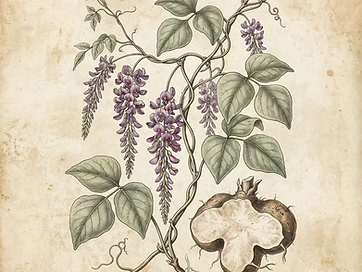
Pueraria lobata
Kudzu
Fabaceae
Sweet, starchy, slightly floral, earthy