
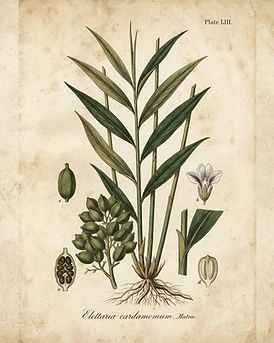
Elettaria cardamomum
Cardamom
Zingiberaceae
Identity
- Common Name
- Cardamom
- Scientific Name
- Elettaria cardamomum
- Botanical Family
- Zingiberaceae
- Native Region
- Southern India and Sri Lanka
- Cultivation Regions
- India, Guatemala, Sri Lanka
- Plant Parts Used
- Seeds and pods
- Synonyms
- Green Cardamom, Queen of Spices
- Caffeine Level
- Caffeine Free
A tropical reed-like perennial 1–4 m tall with lance-shaped leaves and pale flowers on ground-level shoots, producing aromatic green pods containing small dark seeds. The pods/seeds are used.
Historical Background
Cardamom is the 'Queen of Spices,' valued in Ayurveda, Unani, and Middle Eastern and Nordic kitchens for thousands of years — a digestive, breath-freshener, and the defining scent of Arabic coffee (qahwa) and Indian chai.
Earliest recorded uses: Ayurvedic texts and ancient Greek trade; prized in Arabian markets from antiquity.
Cultural significance: Cardamom perfumes Arabic coffee and Indian chai alike — a spice of hospitality from Bedouin tents to Indian homes, and one of the world's oldest traded spices.
Traditional preparations:
- Pod/seed infusion
- Chai base
- Chewed seeds
Traditional Uses
These uses document historical traditions and do not imply proven effectiveness.
Ayurveda
Warming digestive and breath-freshener; part of digestive formulas.
Middle Eastern Traditions
Ground with coffee (qahwa) as a hospitality spice.
Flavor & Aroma
Aroma: Sweet, floral, citrus-spice
Tea Information
Safety & Cautions
Research Summary
Cardamom is widely used as a digestive and aromatic; clinical evidence is limited, with a few small trials suggesting modest effects on digestion and blood pressure, but data are insufficient. It is best understood as a culinary and aromatic digestive.
Evidence levels reflect the currently available scientific literature and may change as new research emerges. Where evidence is limited or conflicting, this is stated plainly.
References & Sources
Related Herbs


Curcuma longa
Turmeric
Zingiberaceae
Warm, earthy, slightly musky

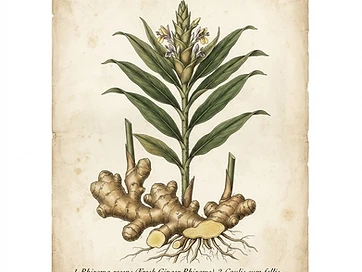
Zingiber officinale
Ginger
Zingiberaceae
Warm, pungent, citrusy-spicy.


Foeniculum vulgare
Fennel
Apiaceae
Sweet, anise, licorice-like