
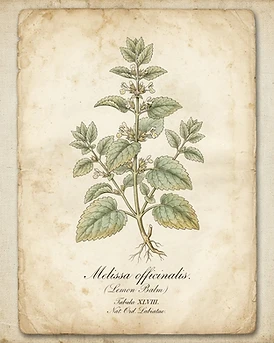
Melissa officinalis
Lemon Balm
Lamiaceae
Identity
- Common Name
- Lemon Balm
- Scientific Name
- Melissa officinalis
- Botanical Family
- Lamiaceae
- Native Region
- Southern Europe and the Mediterranean
- Cultivation Regions
- Europe, North America, Iran
- Plant Parts Used
- Leaves
- Synonyms
- Melissa, Balm, Sweet balm
- Caffeine Level
- Caffeine Free
A bushy perennial of the mint family with soft, wrinkled, heart-shaped leaves that release a lemon scent when crushed. Small white or pale lilac flowers appear in summer.
Historical Background
Lemon balm has been cultivated for over 2,000 years. The 11th-century Persian physician Avicenna wrote of it. Medieval European monasteries grew it in physic gardens. Its name 'Melissa' comes from the Greek for bee, as bees were drawn to it.
Earliest recorded uses: Described by Dioscorides and later by Avicenna.
Cultural significance: A beloved monastic and cottage-garden herb in Europe, associated with cheerfulness and longevity in folk tradition.
Ancient Greece
Dioscorides records its use.
11th century
Avicenna writes of lemon balm in Persian medicine.
Middle Ages
Grown in European monastery gardens.
Traditional preparations:
- Hot infusion of fresh or dried leaves
- Blended with honey
Traditional Uses
These uses document historical traditions and do not imply proven effectiveness.
Traditional European Herbalism
Used as a gentle calming tea to lift the spirits and ease tension.
Middle Eastern Traditions
Valued in Persian-influenced herbal practice for relaxation.
Flavor & Aroma
Aroma: Bright, lemony, herbaceous.
Tea Information
Safety & Cautions
Research Summary
A few small studies have explored lemon balm for mood and relaxation, with some modest short-term effects. Evidence is limited and of variable quality.
Evidence levels reflect the currently available scientific literature and may change as new research emerges. Where evidence is limited or conflicting, this is stated plainly.
References & Sources
Related Herbs

Lavandula angustifolia
Lavender
Lamiaceae
Sweet, herbaceous, intensely floral.


Mentha x piperita
Peppermint
Lamiaceae
Sharp, cool, penetrating menthol.


Mentha spicata
Spearmint
Lamiaceae
Fresh, sweet, minty, slightly fruity