
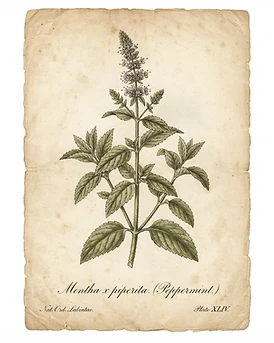
Mentha x piperita
Peppermint
Lamiaceae
Identity
- Common Name
- Peppermint
- Scientific Name
- Mentha x piperita
- Botanical Family
- Lamiaceae
- Native Region
- Europe and the Middle East (a hybrid of water mint and spearmint)
- Cultivation Regions
- Europe, North America, North Africa, Asia
- Plant Parts Used
- Leaves, Essential oil
- Synonyms
- Mentha balsamea, Brandy mint
- Caffeine Level
- Caffeine Free
A perennial hybrid herb with square stems, dark green toothed lance-shaped leaves and spikes of small lilac flowers. The leaves carry a sharp, cooling menthol aroma.
Historical Background
Peppermint was deliberately cultivated in England by the 18th century, though mints have been used since antiquity. Greek mythology associated mint with hospitality. It became a household staple across Europe for both culinary and traditional digestive use.
Earliest recorded uses: Mints are described in ancient Greek, Roman, and Egyptian texts.
Cultural significance: Symbolically associated with hospitality and refreshment. Widely used in European and Middle Eastern tea traditions.
Antiquity
Mints used by Greeks, Romans, and Egyptians.
18th century
Peppermint cultivated commercially in England.
Modern
Among the most widely consumed herbal teas worldwide.
Traditional preparations:
- Hot infusion of fresh or dried leaves
- Cold brew in summer
Traditional Uses
These uses document historical traditions and do not imply proven effectiveness.
Traditional European Herbalism
Used after meals as a digestive comfort and breath freshener.
Middle Eastern Traditions
Mint tea is a central symbol of hospitality across North Africa and the Middle East.
Flavor & Aroma
Aroma: Sharp, cool, penetrating menthol.
Tea Information
Safety & Cautions
Research Summary
Peppermint oil has substantial evidence for irritable bowel syndrome symptoms. Evidence for peppermint leaf tea as a digestive aid is more limited and traditional.
Evidence levels reflect the currently available scientific literature and may change as new research emerges. Where evidence is limited or conflicting, this is stated plainly.
References & Sources
Related Herbs

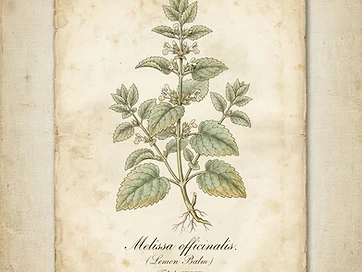
Melissa officinalis
Lemon Balm
Lamiaceae
Bright, lemony, herbaceous.


Mentha spicata
Spearmint
Lamiaceae
Fresh, sweet, minty, slightly fruity


Salvia rosmarinus
Rosemary
Lamiaceae
Strong, camphoraceous, woody