


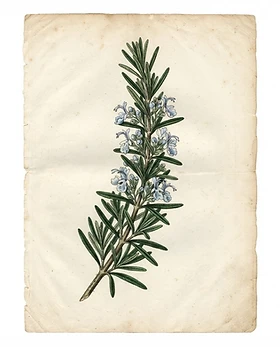
Salvia rosmarinus
Rosemary
Lamiaceae
Identity
- Common Name
- Rosemary
- Scientific Name
- Salvia rosmarinus
- Botanical Family
- Lamiaceae
- Native Region
- Mediterranean
- Cultivation Regions
- Mediterranean, Europe, North America
- Plant Parts Used
- Leaves
- Synonyms
- Rosmarinus officinalis
- Caffeine Level
- Caffeine Free
An evergreen shrub 0.5–1.5 m tall with stiff, needle-like dark green leaves, pale blue flowers along the stems, and a strong, camphoraceous aroma from essential oils. The leaves are culinary and medicinal.
Historical Background
Rosemary has been a Mediterranean culinary and ritual herb since antiquity — symbolizing memory, fidelity, and remembrance, worn at weddings and funerals. It was a memory aid in European scholarship (students wore rosemary garlands) and a digestive tonic, and modern research probes its effects on cognition.
Earliest recorded uses: Greek and Roman use for memory and digestion; medieval European herbals for hair, mind, and stomach.
Cultural significance: Ophelia's 'rosemary for remembrance' in Hamlet echoes a centuries-old association of the herb with memory; it was woven into funerals, weddings, and academic garlands alike.
Traditional preparations:
- Leaf infusion
- Hair rinse
- Steam inhalation
- Culinary
Traditional Uses
These uses document historical traditions and do not imply proven effectiveness.
Traditional European Herbalism
Tea for digestion and 'clearing the mind.'
Modern Herbalism
Used for memory, focus, and scalp/skin circulation.
Flavor & Aroma
Aroma: Strong, camphoraceous, woody
Tea Information
Safety & Cautions
Research Summary
Rosemary and its compounds have been studied for cognition and memory, with a few small trials suggesting modest short-term improvement in attention and recall, particularly in older adults; evidence is limited. It is not a treatment for dementia or cognitive decline.
Evidence levels reflect the currently available scientific literature and may change as new research emerges. Where evidence is limited or conflicting, this is stated plainly.
References & Sources
Related Herbs


Thymus vulgaris
Thyme
Lamiaceae
Strong, herbaceous, thymol


Mentha x piperita
Peppermint
Lamiaceae
Sharp, cool, penetrating menthol.


Satureja hortensis
Savory
Lamiaceae
Warm, peppery, piney, herbaceous