
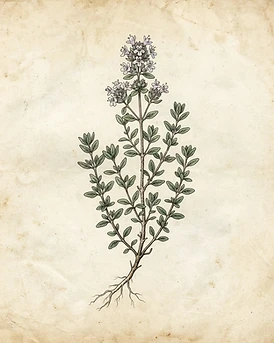
Thymus vulgaris
Thyme
Lamiaceae
Identity
- Common Name
- Thyme
- Scientific Name
- Thymus vulgaris
- Botanical Family
- Lamiaceae
- Native Region
- Mediterranean
- Cultivation Regions
- Mediterranean, Europe, North America
- Plant Parts Used
- Leaves and flowering tops
- Synonyms
- Garden Thyme, Common Thyme
- Caffeine Level
- Caffeine Free
A low woody perennial subshrub 15–30 cm tall with tiny oval grey-green leaves and clusters of small lilac flowers. The leaves are strongly aromatic due to thymol and other essential oils.
Historical Background
Thyme has been a culinary and medicinal herb of the Mediterranean since antiquity, used by the Egyptians in embalming and by Greeks as incense and bath herb. In European herbalism it was a standard remedy for chest and cough complaints, a use supported by modern pharmacognosy.
Earliest recorded uses: Dioscorides and Pliny describe thyme; medieval European herbals used it for chest complaints.
Cultural significance: The name comes from Greek thymos, related to courage and fumigation; thyme was a symbol of bravery in medieval chivalry and a kitchen essential across the Mediterranean.
Traditional preparations:
- Leaf infusion
- Thyme honey
- Steam inhalation
Traditional Uses
These uses document historical traditions and do not imply proven effectiveness.
Traditional European Herbalism
Tea for chesty coughs and to support breathing.
Middle Eastern Traditions
Used as a digestive and respiratory warming herb.
Flavor & Aroma
Aroma: Strong, herbaceous, thymol
Tea Information
Safety & Cautions
Research Summary
Thyme preparations are supported by a few clinical trials for acute bronchitis and cough, where thyme syrup or combinations modestly reduced cough severity and duration compared with placebo. Evidence is limited but more consistent than for many respiratory herbs. Thyme is best understood as a traditional cough comfort herb, not a treatment for infection.
Evidence levels reflect the currently available scientific literature and may change as new research emerges. Where evidence is limited or conflicting, this is stated plainly.
References & Sources
Related Herbs

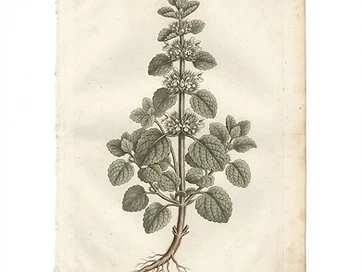
Marrubium vulgare
Horehound
Lamiaceae
Bitter, earthy, menthol-like, herbaceous


Salvia officinalis
Sage
Lamiaceae
Herbaceous, earthy, savory, slightly camphoraceous


Salvia rosmarinus
Rosemary
Lamiaceae
Strong, camphoraceous, woody