

Salvia officinalis
Sage
Lamiaceae
Identity
- Common Name
- Sage
- Scientific Name
- Salvia officinalis
- Botanical Family
- Lamiaceae
- Native Region
- Mediterranean
- Cultivation Regions
- Mediterranean, Europe, North America
- Plant Parts Used
- Leaves
- Synonyms
- Common Sage, Garden Sage, Dalmatian Sage
- Caffeine Level
- Caffeine Free
A woody-based evergreen subshrub 30-80 cm tall with square stems, soft grey-green oval wrinkled pebbled leaves, and spikes of violet-blue two-lipped tubular flowers loved by bees.
Historical Background
Revered since antiquity as a sacred, life-preserving herb — its Latin name Salvia shares the root of 'salvation.' Romans, Arabs, and medieval Europeans prized sage for memory, sore throats, and digestion, and the proverb 'Why should a man die who has sage in his garden?' circulated for centuries.
Earliest recorded uses: Ancient Greek, Roman, Egyptian, and Arab medicine; name Salvia from Latin salvare (to save).
Traditional preparations:
- Leaf infusion
- Gargle
- Honey-sage syrup
Traditional Uses
These uses document historical traditions and do not imply proven effectiveness.
Traditional European Herbalism
Sore-throat gargle, digestive, and memory tonic.
Middle Eastern Traditions
Digestive and throat tea; culinary seasoning.
Modern Herbalism
Cognitive and menopausal hot-flash support (modest evidence).
Flavor & Aroma
Aroma: Herbaceous, earthy, savory, slightly camphoraceous
Tea Information
Safety & Cautions
Research Summary
Sage has a strong tradition for sore throats (gargle), digestion, memory, and menopausal hot flashes. Small trials support modest benefits for sore-throat pain and cognition/hot flashes, but evidence remains limited and it is not a treatment for disease.
Evidence levels reflect the currently available scientific literature and may change as new research emerges. Where evidence is limited or conflicting, this is stated plainly.
References & Sources
Related Herbs


Thymus vulgaris
Thyme
Lamiaceae
Strong, herbaceous, thymol


Prunella vulgaris
Self-Heal
Lamiaceae
Mild, slightly bitter, green, earthy

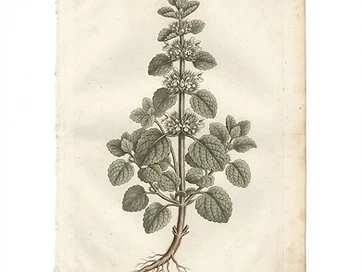
Marrubium vulgare
Horehound
Lamiaceae
Bitter, earthy, menthol-like, herbaceous