
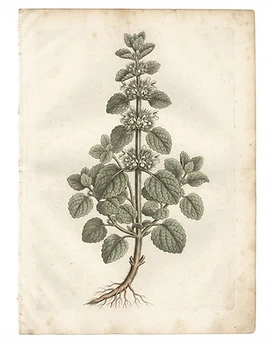
Marrubium vulgare
Horehound
Lamiaceae
Identity
- Common Name
- Horehound
- Scientific Name
- Marrubium vulgare
- Botanical Family
- Lamiaceae
- Native Region
- Europe and the Mediterranean
- Cultivation Regions
- Europe, Asia, North Africa, North America
- Plant Parts Used
- Aerial parts, Leaves
- Synonyms
- White Horehound, Common Horehound, Marrub
- Caffeine Level
- Caffeine Free
A bushy square-stemmed perennial 30-80 cm tall covered in soft white hairs, with rounded, deeply wrinkled grey-green netted leaves and dense whorls of small white two-lipped tubular flowers along the upper stem.
Historical Background
Horehound has been the quintessential European cough herb since antiquity, brewed into bitter syrups, teas, and the familiar horehound candy lozenges. Its intensely bitter taste gave it a reputation as a hardy remedy for chesty coughs and sluggish digestion.
Earliest recorded uses: Egyptian, Greek, and Roman medicine; the classic European cough herb for lozenges and syrups.
Traditional preparations:
- Aerial-part infusion
- Horehound cough syrup
- Horehound candy lozenges
Traditional Uses
These uses document historical traditions and do not imply proven effectiveness.
Traditional European Herbalism
Expectorant for chesty coughs and sore throat; bitter digestive.
Modern Herbalism
Cough, sore throat, and digestive bitter.
Flavor & Aroma
Aroma: Bitter, earthy, menthol-like, herbaceous
Tea Information
Safety & Cautions
Research Summary
Horehound has a strong tradition as a bitter digestive and expectorant cough remedy, recognized in European pharmacopoeias. Clinical evidence is limited; small studies support some expectorant and antimicrobial activity, but it is not a treatment for cough, infection, or digestive disease.
Evidence levels reflect the currently available scientific literature and may change as new research emerges. Where evidence is limited or conflicting, this is stated plainly.
References & Sources
Related Herbs


Ballota nigra
Black Horehound
Lamiaceae
Strong, unpleasant, herbaceous


Thymus vulgaris
Thyme
Lamiaceae
Strong, herbaceous, thymol


Salvia officinalis
Sage
Lamiaceae
Herbaceous, earthy, savory, slightly camphoraceous