
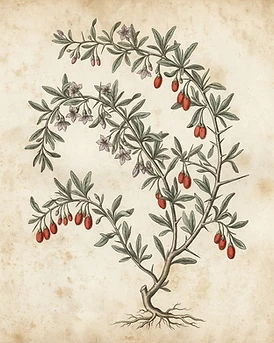
Lycium barbarum
Goji Berry
Solanaceae
Identity
- Common Name
- Goji Berry
- Scientific Name
- Lycium barbarum
- Botanical Family
- Solanaceae
- Native Region
- China (Ningxia, Xinjiang)
- Cultivation Regions
- China, Mongolia, Tibet region, North America
- Plant Parts Used
- Fruit (berries), Root bark (occasionally)
- Synonyms
- Wolfberry, Gouqi, Himalayan Goji
- Caffeine Level
- Caffeine Free
A woody deciduous shrub 1-3 m tall with slender arching sometimes thorny branches, small narrow grey-green lance-shaped leaves, small pale purple tubular flowers, and clusters of bright red oblong berries.
Historical Background
Goji (wolfberry) has been treasured in Traditional Chinese Medicine for over two millennia as a Yin-nourishing tonic for the eyes, liver, blood, and longevity. The bright red berries are eaten directly or steeped into tonifying teas, soups, and congees, often with jujube and chrysanthemum.
Earliest recorded uses: Recorded in Chinese herbals for over 2,000 years; a TCM longevity and tonic berry.
Traditional preparations:
- Berry infusion
- Longevity soup/decoction
- Tea with jujube & chrysanthemum
Traditional Uses
These uses document historical traditions and do not imply proven effectiveness.
Traditional Chinese Medicine
Nourishes Liver and Kidney Yin; tonic for eyes, blood, and longevity.
Modern Herbalism
Antioxidant and vitality tonic; superfood berry tea.
Flavor & Aroma
Aroma: Sweet, tangy, fruity, slightly herbal
Tea Information
Safety & Cautions
Research Summary
Goji berries are rich in antioxidants and have a long tradition as a longevity tonic. Small trials suggest modest effects on antioxidant markers, but evidence is limited and inconsistent, with notable bleeding interaction with warfarin. It is not a treatment for eye disease, diabetes, or any condition.
Evidence levels reflect the currently available scientific literature and may change as new research emerges. Where evidence is limited or conflicting, this is stated plainly.
References & Sources
Related Herbs

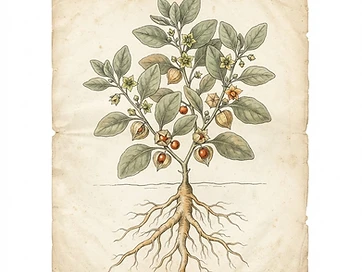
Withania somnifera
Ashwagandha
Solanaceae
Earthy, pungent, horse-like

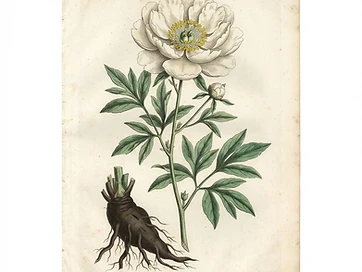
Paeonia lactiflora
White Peony
Paeoniaceae
Floral, sweet, slightly bitter, earthy


Trametes versicolor
Turkey Tail
Polyporaceae
Earthy, mild, mushroom-like, slightly woody