
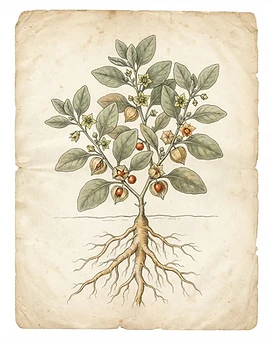
Withania somnifera
Ashwagandha
Solanaceae
Identity
- Common Name
- Ashwagandha
- Scientific Name
- Withania somnifera
- Botanical Family
- Solanaceae
- Native Region
- Indian subcontinent
- Cultivation Regions
- India, Nepal, Middle East, Parts of Africa
- Plant Parts Used
- Root, Leaves
- Synonyms
- Indian Ginseng, Winter Cherry
- Caffeine Level
- Caffeine Free
An evergreen shrub 30–75 cm tall with velvety oval leaves, small greenish-yellow flowers, and enclosed orange-red berries. The pale, slightly wrinkled root is the primary medicinal part and carries a distinctive earthy odor; its Sanskrit name means 'smell of a horse,' referencing both odor and the strength it was said to impart.
Historical Background
Ashwagandha is a cornerstone rasayana (rejuvenative) herb of Ayurveda, used for over 3,000 years to build vitality, calm the mind, and support sleep and resilience. It has surged in modern men's wellness culture as an 'adaptogen,' with claims around stress, testosterone, and athletic recovery.
Earliest recorded uses: Charaka Samhita and Sushruta Samhita (early centuries CE) classify ashwagandha as a rasayana for longevity and strength.
Cultural significance: Revered in Ayurveda as a restorative for the aged, the debilitated, and those recovering from illness; its modern rebranding as a 'men's vitality' supplement has made it one of the best-selling herbs in the West.
~600 BCE
Referenced in early Ayurvedic texts as a rasayana tonic.
20th c.
Soviet and Indian researchers characterize it as an adaptogen.
2010s+
Mainstream popularity surges in men's wellness supplements.
Traditional preparations:
- Root powder in warm milk (classic)
- Decoction
- Standardized extracts
Traditional Uses
These uses document historical traditions and do not imply proven effectiveness.
Ayurveda
Rasayana for vitality, calm, and restorative sleep; used for stress and debility.
Modern Herbalism
Adaptogen for stress resilience; studied for stress, sleep, and male reproductive health.
Flavor & Aroma
Aroma: Earthy, pungent, horse-like
Tea Information
Safety & Cautions
Research Summary
Ashwagandha root is studied as an adaptogen. Several trials report modest reductions in stress and anxiety markers and some improvement in sleep, though many studies are small or sponsored by manufacturers. A small number of trials in men suggest possible increases in testosterone within normal ranges and improvements in sperm counts in stressed or infertile men, but evidence is limited and not sufficient to recommend it as a testosterone treatment. Quality varies widely between products.
Evidence levels reflect the currently available scientific literature and may change as new research emerges. Where evidence is limited or conflicting, this is stated plainly.
References & Sources
Related Herbs

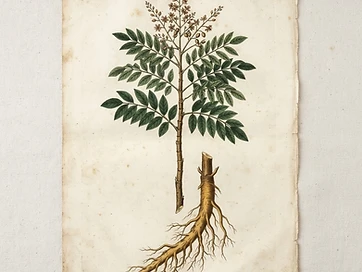
Eurycoma longifolia
Tongkat Ali
Simaroubaceae
Bitter, slightly woody

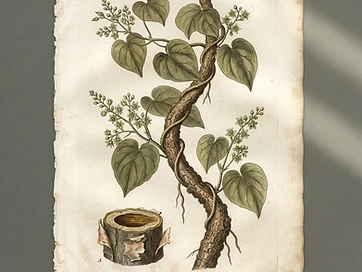
Tinospora cordifolia
Guduchi
Menispermaceae
Bitter, earthy, slightly starchy

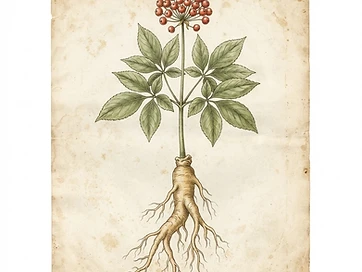
Panax ginseng
Asian Ginseng
Araliaceae
Earthy, sweet, slightly balsamic