

Tinospora cordifolia
Guduchi
Menispermaceae
Identity
- Common Name
- Guduchi
- Scientific Name
- Tinospora cordifolia
- Botanical Family
- Menispermaceae
- Native Region
- India and tropical Asia
- Cultivation Regions
- India, Sri Lanka, Burma, tropical Asia
- Plant Parts Used
- Stem
- Synonyms
- Giloy, Amrita, Heart-Leaved Moonseed
- Caffeine Level
- Caffeine Free
A large climbing tropical vine with heart-shaped cordate leaves and a thick woody corky stem, small greenish-yellow flowers in clusters, and a papery bark; the stem is the part used, rich in bitter principles.
Historical Background
Guduchi (giloy, 'amrita' or 'nectar of immortality') is a revered rasayana of Ayurveda, a climbing vine whose bitter stem is decocted for vitality, immune, and fever traditions. Named for its heart-shaped leaves and potent rasayana reputation, it remains a daily Indian household tonic.
Earliest recorded uses: Used in Ayurvedic medicine for millennia; a revered 'amrita' (nectar of immortality) rasayana herb.
Traditional preparations:
- Stem decoction
- Immune & vitality tea
- Rasayana blend with amla
Traditional Uses
These uses document historical traditions and do not imply proven effectiveness.
Ayurveda
'Amrita' rasayana for vitality, immune, and fever traditions.
Modern Herbalism
Vitality and immune tea.
Flavor & Aroma
Aroma: Bitter, earthy, slightly starchy
Tea Information
Safety & Cautions
Research Summary
Guduchi has a long Ayurvedic tradition as a rasayana, immune, and fever herb. Clinical evidence is limited; some small trials suggest immune-modulating activity, but it is not a treatment for infection, fever, diabetes, or any disease, and may interact with immunosuppressants.
Evidence levels reflect the currently available scientific literature and may change as new research emerges. Where evidence is limited or conflicting, this is stated plainly.
References & Sources
Related Herbs

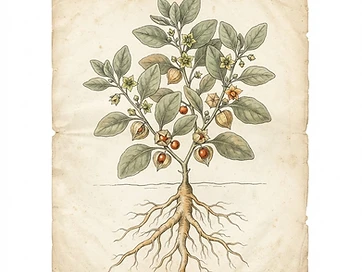
Withania somnifera
Ashwagandha
Solanaceae
Earthy, pungent, horse-like


Hydrastis canadensis
Goldenseal
Ranunculaceae
Bitter, earthy, slightly astringent


Curcuma longa
Turmeric
Zingiberaceae
Warm, earthy, slightly musky