


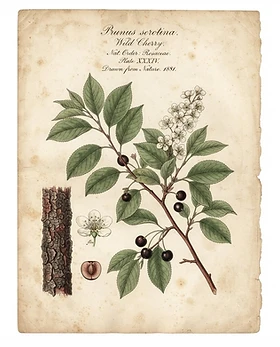
Prunus serotina
Wild Cherry Bark
Rosaceae
Identity
- Common Name
- Wild Cherry Bark
- Scientific Name
- Prunus serotina
- Botanical Family
- Rosaceae
- Native Region
- Eastern North America
- Cultivation Regions
- North America
- Plant Parts Used
- Inner bark (young branches)
- Synonyms
- Black Cherry, Wild Black Cherry, Choke Cherry Bark
- Caffeine Level
- Caffeine Free
A large forest tree with oval green leaves, clusters of small white flowers, and small dark red-black cherries. The reddish-brown inner bark is the medicinal part, long the base of 'wild cherry syrup'.
Historical Background
Wild cherry bark was the classic American cough remedy, the base of the famous 'wild cherry cough syrup' listed in early U.S. pharmacopeias.
Earliest recorded uses: Cough, cold, and soothing irritated, tickly coughs.
Cultural significance: A signature remedy of 19th-century American pharmacy; once nearly every cough syrup drew on wild cherry bark.
Indigenous
Native American groups use wild cherry bark for coughs and colds.
19th century
Wild cherry syrup codified in the U.S. Pharmacopeia.
Traditional preparations:
- Cold or warm infusion (not long boiled)
- Syrup
- Tincture
Traditional Uses
These uses document historical traditions and do not imply proven effectiveness.
Native American Traditions
Bark decoction for coughs and colds.
Traditional European Herbalism (adopted)
Syrup and infusion as a sedative antitussive for dry, irritable cough.
Flavor & Aroma
Aroma: Bitter almond, woody, aromatic
Tea Information
Safety & Cautions
Research Summary
Prunasin and wild cherry bark have a long antitussive tradition; modern controlled trials are lacking.
Evidence levels reflect the currently available scientific literature and may change as new research emerges. Where evidence is limited or conflicting, this is stated plainly.
References & Sources
References & Sources
- American Botanical Council · Expanded Commission E Monographs (2000)
- American Herbal Products Association · Botanical Safety Handbook (2013)
Related Herbs


Eriobotrya japonica
Loquat
Rosaceae
Faint, fruity-green

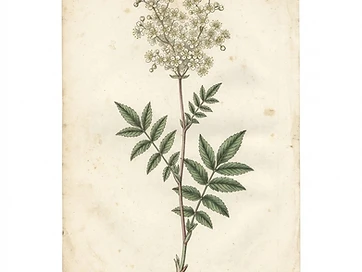
Filipendula ulmaria
Meadowsweet
Rosaceae
Sweet, almond-like, floral, honeyed


Inula helenium
Elecampane
Asteraceae
Pungent, earthy, aromatic