
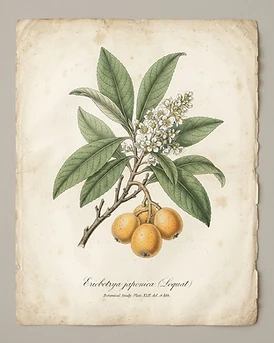
Eriobotrya japonica
Loquat
Rosaceae
Identity
- Common Name
- Loquat
- Scientific Name
- Eriobotrya japonica
- Botanical Family
- Rosaceae
- Native Region
- China (cultivated widely in Japan)
- Cultivation Regions
- China, Japan, Mediterranean, Americas
- Plant Parts Used
- Leaves, Fruit (food)
- Synonyms
- Japanese Medlar, Pi Pa Ye, Biwa
- Caffeine Level
- Caffeine Free
An evergreen tree with large leathery oval green leaves (downy beneath) and clusters of small white flowers followed by orange-yellow fuzzy fruits. The leaves are the principal medicinal part in TCM.
Historical Background
Loquat leaf (Pi Pa Ye) is a long-standing TCM remedy for cough and 'descending lung qi', featured in the classic syrup Pipa Gao. The fruit is a beloved spring food.
Earliest recorded uses: Coughs, phlegm, and soothing the throat and lungs.
Cultural significance: The subject of a Song-dynasty poem and the base of the famous loquat cough syrup; a staple of East Asian cough care.
Tang/Song
Loquat leaf syrup (Pipa Gao) codified for cough.
Modern
Adopted worldwide as an ornamental and fruit tree.
Traditional preparations:
- Leaf infusion (de-fuzzed)
- Leaf syrup
- Roasted leaf tea
Traditional Uses
These uses document historical traditions and do not imply proven effectiveness.
Traditional Chinese Medicine
Downy leaf infusion or syrup for cough, phlegm, and irritated throat.
Japanese Traditions
Leaves used in folk practice for skin and respiratory comfort.
Flavor & Aroma
Aroma: Faint, fruity-green
Tea Information
Safety & Cautions
Research Summary
Triterpenes (ursolic/oleanolic acid) and amygdalin are studied for anti-inflammatory and expectorant activity; clinical evidence for cough outcomes is limited.
Evidence levels reflect the currently available scientific literature and may change as new research emerges. Where evidence is limited or conflicting, this is stated plainly.
References & Sources
References & Sources
- WHO · WHO Monographs on Selected Medicinal Plants (various)
Related Herbs


Prunus serotina
Wild Cherry Bark
Rosaceae
Bitter almond, woody, aromatic


Rubus fruticosus
Blackberry Leaf
Rosaceae
Mild, fruity-tannic, green, slightly earthy


Fragaria vesca
Strawberry Leaf
Rosaceae
Mild, fruity, green, lightly sweet