
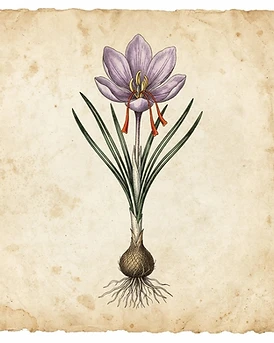
Crocus sativus
Saffron
Iridaceae
Identity
- Common Name
- Saffron
- Scientific Name
- Crocus sativus
- Botanical Family
- Iridaceae
- Native Region
- Iran and the eastern Mediterranean
- Cultivation Regions
- Iran, Spain, India (Kashmir), Greece
- Plant Parts Used
- Stigma (threads)
- Synonyms
- Saffron Threads, Za'faran, Crocus
- Caffeine Level
- Caffeine Free
A small bulb plant with narrow grass-like leaves and a single lilac-purple crocus flower revealing three long bright crimson-orange stigmas — the saffron threads hand-harvested as the world's most precious spice.
Historical Background
Saffron has been prized for over 3,000 years across Persian, Minoan, Ayurvedic, and Mediterranean cultures as a dye, perfume, and warming tea. Hand-harvested crimson threads, the world's most precious spice, brew a golden, honey-floral cup traditionally sipped for mood and comfort.
Earliest recorded uses: Used in Persian, Minoan, and Ayurvedic traditions for over 3,000 years; a prized dye, perfume, and medicinal tea.
Traditional preparations:
- Thread infusion in warm water or milk
- Golden milk with cardamom
- Persian saffron tea
Traditional Uses
These uses document historical traditions and do not imply proven effectiveness.
Persian Traditions
Warming mood, vitality, and heart tonic; prized dye and spice.
Modern Herbalism
Mood-support and comforting golden tea.
Flavor & Aroma
Aroma: Floral, honeyed, warm, slightly earthy
Tea Information
Safety & Cautions
Research Summary
Saffron has moderate evidence from small trials for mild mood support, comparable in some studies to low-dose antidepressants, though quality varies. It is not a substitute for professional care and should be discussed with a clinician before combining with mood medications.
Evidence levels reflect the currently available scientific literature and may change as new research emerges. Where evidence is limited or conflicting, this is stated plainly.
References & Sources
Related Herbs


Lonicera japonica
Honeysuckle
Caprifoliaceae
Sweet, floral, honeyed, slightly green

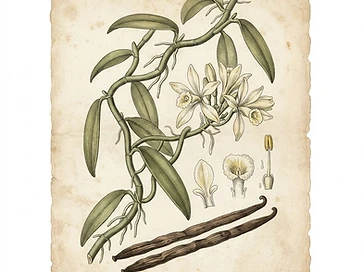
Vanilla planifolia
Vanilla
Orchidaceae
Sweet, creamy, floral, warm


Chrysanthemum morifolium
Chrysanthemum
Asteraceae
Floral, honeyed, slightly herbal, cool