


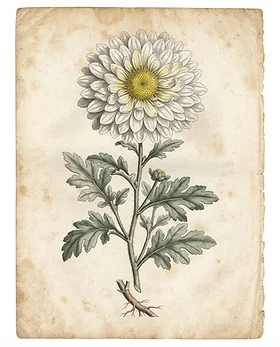
Chrysanthemum morifolium
Chrysanthemum
Asteraceae
Identity
- Common Name
- Chrysanthemum
- Scientific Name
- Chrysanthemum morifolium
- Botanical Family
- Asteraceae
- Native Region
- East Asia
- Cultivation Regions
- China, Japan, Korea, Europe
- Plant Parts Used
- Flowers
- Synonyms
- Ju Hua, Florists' Chrysanthemum, Mum
- Caffeine Level
- Caffeine Free
A branching perennial 30-100 cm tall with deeply lobed grey-green leaves and large showy flower heads of many layered white-to-pale-yellow ray florets around a soft yellow center; the flowers are the part used.
Historical Background
Chrysanthemum has been a beloved flower and cooling tea in China since the Han dynasty, symbolizing autumn, longevity, and scholarly refinement. Brewed pale yellow, it is the classic Chinese summer cooling tea, often enjoyed with goji berries or rock sugar, and steeped in glass to admire the unfolding blooms.
Earliest recorded uses: Used in China since the Han dynasty; recorded in the Shennong Ben Cao Jing; a classic cooling summer tea.
Traditional preparations:
- Flower infusion (glass teapot)
- Cooling summer tea with rock sugar
- Goji-chrysanthemum tea
Traditional Uses
These uses document historical traditions and do not imply proven effectiveness.
Traditional Chinese Medicine
Clears Heat, brightens eyes, cools the Liver; classic summer cooling tea.
Modern Herbalism
Relaxing, eye-soothing floral tea.
Flavor & Aroma
Aroma: Floral, honeyed, slightly herbal, cool
Tea Information
Safety & Cautions
Research Summary
Chrysanthemum has a long tradition as a cooling, eye-soothing, and liver-clearing tea. Clinical evidence is limited; preclinical work shows antioxidant and anti-inflammatory activity, but it is not a treatment for eye disease, fever, or any condition.
Evidence levels reflect the currently available scientific literature and may change as new research emerges. Where evidence is limited or conflicting, this is stated plainly.
References & Sources
Related Herbs


Tussilago farfara
Coltsfoot
Asteraceae
Mild, slightly sweet, herbaceous, honeyed

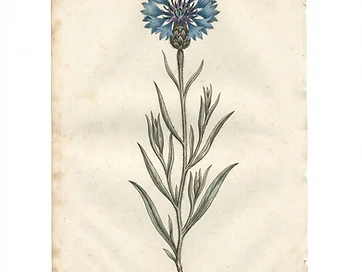
Centaurea cyanus
Cornflower
Asteraceae
Floral, mild, slightly sweet, green

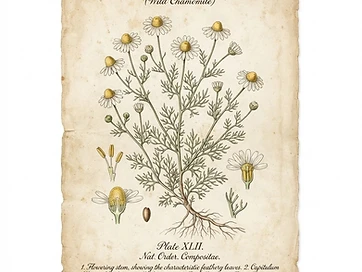
Matricaria chamomilla
Chamomile
Asteraceae
Sweet, apple-like, with soft hay and honey notes.