
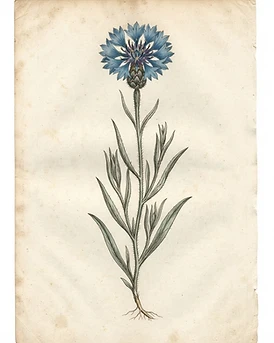
Centaurea cyanus
Cornflower
Asteraceae
Identity
- Common Name
- Cornflower
- Scientific Name
- Centaurea cyanus
- Botanical Family
- Asteraceae
- Native Region
- Europe and the Mediterranean
- Cultivation Regions
- Europe, Mediterranean, North America (ornamental)
- Plant Parts Used
- Flowers (petals)
- Synonyms
- Bachelor's Button, Bluebottle, Corn Bluet
- Caffeine Level
- Caffeine Free
A slender upright annual with narrow grey-green lance-shaped leaves and a single fringed bright blue thistle-like flower head with ruffled outer petals and a darker center; the petals are the part used.
Historical Background
Cornflower has been a beloved blue flower of European grain fields for centuries, gathered for gentle eye and digestive teas. Its ruffled blue petals are a favorite of botanical tea blends, lending color and a mild, floral cup.
Earliest recorded uses: European folk traditions for centuries; a beloved field flower and gentle eye-comfort herb.
Traditional preparations:
- Petal infusion
- Eye-comfort tea
- Decorative blend accent
Traditional Uses
These uses document historical traditions and do not imply proven effectiveness.
Traditional European Herbalism
Gentle eye and digestive herb; beloved field flower.
Modern Herbalism
Floral and decorative tea.
Flavor & Aroma
Aroma: Floral, mild, slightly sweet, green
Tea Information
Safety & Cautions
Research Summary
Cornflower has a long European tradition as a gentle eye and digestive herb. Clinical evidence is insufficient; it is not a treatment for eye disease, conjunctivitis, or any condition, though it remains a popular, beautiful tea ingredient.
Evidence levels reflect the currently available scientific literature and may change as new research emerges. Where evidence is limited or conflicting, this is stated plainly.
References & Sources
Related Herbs

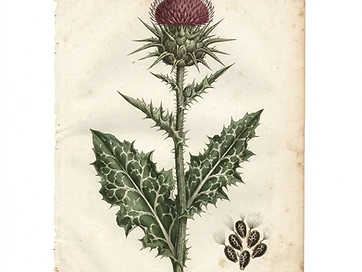
Silybum marianum
Milk Thistle
Asteraceae
Mild, slightly nutty, earthy, green


Cynara cardunculus
Artichoke Leaf
Asteraceae
Mild, slightly bitter, green, earthy


Calendula officinalis
Calendula
Asteraceae
Warm, floral, faintly honeyed