
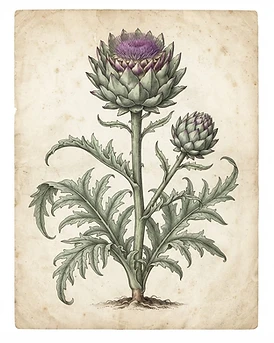
Cynara cardunculus
Artichoke Leaf
Asteraceae
Identity
- Common Name
- Artichoke Leaf
- Scientific Name
- Cynara cardunculus
- Botanical Family
- Asteraceae
- Native Region
- Mediterranean basin
- Cultivation Regions
- Mediterranean, Italy, France, California
- Plant Parts Used
- Leaves
- Synonyms
- Globe Artichoke, Cynara, Alcachofa
- Caffeine Level
- Caffeine Free
A tall thistle-like perennial with large deeply lobed grey-green arching leaves and large edible flower buds with overlapping pointed green bracts and a purple thistle-like center; the leaves are the part used in herbal tea.
Historical Background
Artichoke has been a prized food and bitter digestive of Mediterranean cultures since Greek and Roman times. Its large grey-green leaves brew a gentle, liver-supporting tea long valued for digestion and cholesterol traditions.
Earliest recorded uses: Mediterranean food and medicine for millennia; liver and digestive leaf traditions since Greek and Roman times.
Traditional preparations:
- Leaf infusion
- Digestive bitter tea
- Liver-support blend with milk thistle
Traditional Uses
These uses document historical traditions and do not imply proven effectiveness.
Traditional European Herbalism
Bitter digestive and liver-support leaf tea.
Modern Herbalism
Digestive and cholesterol-tradition tea.
Flavor & Aroma
Aroma: Mild, slightly bitter, green, earthy
Tea Information
Safety & Cautions
Research Summary
Artichoke leaf has moderate evidence for mild cholesterol and digestive support; cynarin and luteolin are active. It is not a treatment for high cholesterol, liver disease, IBS, or any disease; discuss with a clinician given drug interactions.
Evidence levels reflect the currently available scientific literature and may change as new research emerges. Where evidence is limited or conflicting, this is stated plainly.
References & Sources
Related Herbs

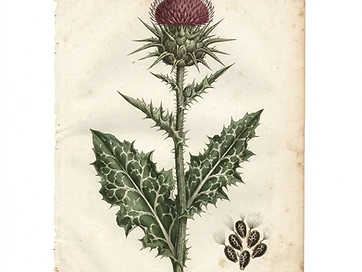
Silybum marianum
Milk Thistle
Asteraceae
Mild, slightly nutty, earthy, green


Carthamus tinctorius
Safflower
Asteraceae
Mild, slightly bitter, green


Calendula officinalis
Calendula
Asteraceae
Warm, floral, faintly honeyed