
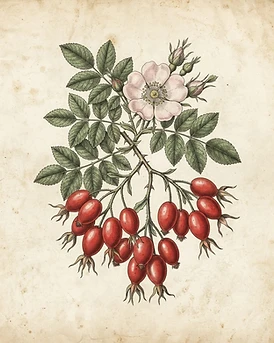
Rosa canina
Rose Hips
Rosaceae
Identity
- Common Name
- Rose Hips
- Scientific Name
- Rosa canina
- Botanical Family
- Rosaceae
- Native Region
- Europe, Asia, North Africa
- Cultivation Regions
- Europe, Asia, North America, Andes
- Plant Parts Used
- Fruit (hips)
- Synonyms
- Dog Rose, Hip Berry, Rosehip
- Caffeine Level
- Caffeine Free
A scrambling deciduous shrub 1-3 m tall with arching prickly stems, pinnate leaves of serrated oval leaflets, pale-pink five-petaled single roses, and bright orange-red oval hips (fruit) that persist into winter.
Historical Background
Rose hips have been gathered across Europe, Asia, and the Americas since antiquity as a sour, vitamin-rich food and remedy. During World War II, British schoolchildren collected hips to make syrup as a citrus substitute, cementing rose hip tea's place in modern folk practice.
Earliest recorded uses: European and indigenous use for centuries; widely used in WWII Britain as a vitamin C source when citrus was scarce.
Traditional preparations:
- Whole or crushed hip infusion
- Syrup
- Decoction
Traditional Uses
These uses document historical traditions and do not imply proven effectiveness.
Traditional European Herbalism
Winter tonic for vitamin C and general resistance; syrup for children.
Modern Herbalism
Cold-season tonic and antioxidant beverage.
Flavor & Aroma
Aroma: Tart, fruity, slightly floral
Tea Information
Safety & Cautions
Research Summary
Rose hips are rich in vitamin C and antioxidants. Small trials suggest modest benefit for osteoarthritis symptoms, but evidence is limited and not a treatment. Vitamin C content is well documented but declines in drying and brewing.
Evidence levels reflect the currently available scientific literature and may change as new research emerges. Where evidence is limited or conflicting, this is stated plainly.
References & Sources
Related Herbs


Crataegus monogyna
Hawthorn
Rosaceae
Mild, slightly tart, fruity, green


Fragaria vesca
Strawberry Leaf
Rosaceae
Mild, fruity, green, lightly sweet

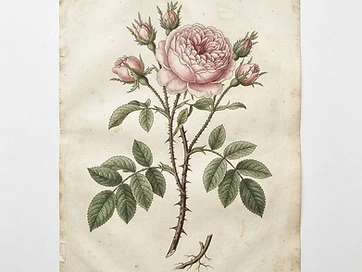
Rosa × damascena
Damask Rose
Rosaceae
Deep, sweet, classic rose