


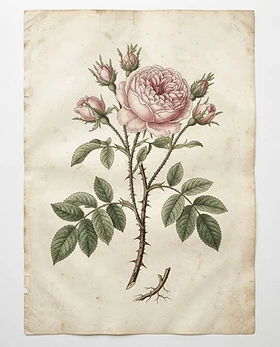
Rosa × damascena
Damask Rose
Rosaceae
Identity
- Common Name
- Damask Rose
- Scientific Name
- Rosa × damascena
- Botanical Family
- Rosaceae
- Native Region
- Middle East and central Asia
- Cultivation Regions
- Middle East, Bulgaria, Iran, Turkey, Mediterranean
- Plant Parts Used
- Petals, Rosehips (of related species)
- Synonyms
- Damascus Rose, Oil Rose
- Caffeine Level
- Caffeine Free
A deciduous shrub 1–2 m tall with arching thorny stems, pinnate serrated leaflets, and dense, fragrant pink flowers of many layered petals. The petals and their distilled oil (rose water, attar) are the medicinal and aromatic parts.
Historical Background
The damask rose has been cultivated for fragrance, medicine, and ritual from Persia to the Mediterranean for over 2,000 years. Rose water reached Europe via the Crusades and Arab medicine, and roses became enduring symbols of beauty, the heart, and devotion across cultures.
Earliest recorded uses: Persian and Arab physicians (Avicenna) refined rose distillation; used for skin, mood, and the heart in Greco-Arabic medicine.
Cultural significance: The rose is perhaps the most culturally loaded flower in human history — symbol of love and the heart in Persian, Arab, European, and South Asian traditions, and the source of attar of roses, once worth more than gold by weight.
Traditional preparations:
- Petal infusion
- Rose water
- Honey, syrup, and conserves
Traditional Uses
These uses document historical traditions and do not imply proven effectiveness.
Middle Eastern Traditions
Rose water for skin, mood, and as a heart-comforting cordial.
Modern Herbalism
Petal tea for relaxation, skin, and menstrual comfort.
Flavor & Aroma
Aroma: Deep, sweet, classic rose
Tea Information
Safety & Cautions
Research Summary
Rose has limited clinical research; its uses rest largely on tradition for relaxation, skin comfort, and menstrual support. Some small studies of rose aromatherapy suggest modest mood effects. It is best understood as a soothing aromatic rather than a treatment for any condition.
Evidence levels reflect the currently available scientific literature and may change as new research emerges. Where evidence is limited or conflicting, this is stated plainly.
References & Sources
Related Herbs

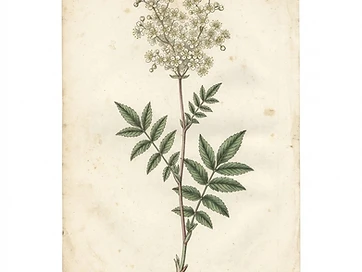
Filipendula ulmaria
Meadowsweet
Rosaceae
Sweet, almond-like, floral, honeyed

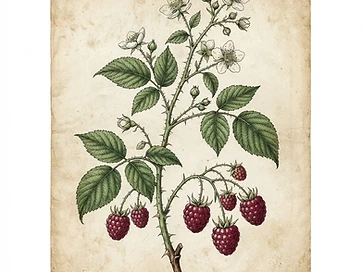
Rubus idaeus
Red Raspberry Leaf
Rosaceae
Fresh, green, faintly fruity


Agrimonia eupatoria
Agrimony
Rosaceae
Mild, slightly astringent, honeyed, green