
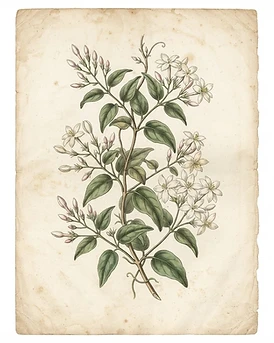
Jasminum sambac
Jasmine
Oleaceae
Identity
- Common Name
- Jasmine
- Scientific Name
- Jasminum sambac
- Botanical Family
- Oleaceae
- Native Region
- Himalayan foothills to Southeast Asia
- Cultivation Regions
- China, India, Persia/Iran, Southeast Asia
- Plant Parts Used
- Flowers
- Synonyms
- Arabian Jasmine, Maid of Orleans, Pikake
- Caffeine Level
- Caffeine Free (when pure; jasmine tea blends contain green tea caffeine)
A climbing or scrambling evergreen vine with glossy oval pointed dark green leaves and clusters of waxy white star-shaped intensely fragrant flowers that open at night; the flowers are the part used for scenting tea.
Historical Background
Jasmine has perfumed Chinese tea and Persian gardens for over a millennium, its night-blooming white blossoms layered over green tea leaves to create the celebrated jasmine tea of the Song dynasty and beyond. Brewed alone, its delicate floral cup is a symbol of purity, elegance, and calm.
Earliest recorded uses: Cultivated in China and Persia for over 1,500 years; scenting tea since the Song dynasty.
Traditional preparations:
- Pure flower infusion
- Scented green/white tea
- Evening floral blend
Traditional Uses
These uses document historical traditions and do not imply proven effectiveness.
Traditional Chinese Medicine
Fragrant calming tea; scenting for fine tea since the Song dynasty.
Modern Herbalism
Relaxing floral tea for mood and digestion.
Flavor & Aroma
Aroma: Sweet, floral, heady, exotic
Tea Information
Safety & Cautions
Research Summary
Jasmine has a long tradition as a calming, fragrant tea. Preclinical work shows antioxidant and mild relaxing activity, but clinical evidence is limited and it is not a treatment for anxiety, depression, or any disease.
Evidence levels reflect the currently available scientific literature and may change as new research emerges. Where evidence is limited or conflicting, this is stated plainly.
References & Sources
Related Herbs

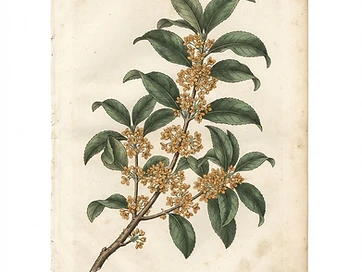
Osmanthus fragrans
Osmanthus
Oleaceae
Apricot, floral, sweet, buttery

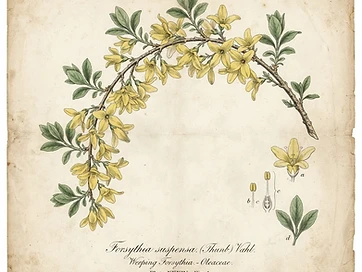
Forsythia suspensa
Forsythia
Oleaceae
Faint, clean and floral-green


Cyclopia genistoides
Honeybush
Fabaceae
Sweet, honey-like, woody, floral