
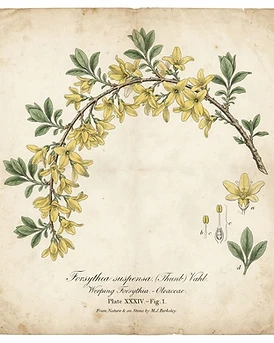
Forsythia suspensa
Forsythia
Oleaceae
Identity
- Common Name
- Forsythia
- Scientific Name
- Forsythia suspensa
- Botanical Family
- Oleaceae
- Native Region
- China
- Cultivation Regions
- China, East Asia, Worldwide ornamental
- Plant Parts Used
- Fruit (dried, unripe or ripe)
- Synonyms
- Lian Qiao, Golden Bell, Weeping Forsythia
- Caffeine Level
- Caffeine Free
An arching deciduous shrub with simple oval leaves and abundant bright yellow four-petalled bell-shaped flowers, followed by capsule fruits. The dried fruit (Lian Qiao) is the medicinal part in TCM.
Historical Background
A core TCM herb for 'clearing heat and detoxifying', forsythia fruit is best known as half of the classic cold-onset pairing Forsythia + Honeysuckle (Yin Qiao).
Earliest recorded uses: Early-stage febrile colds, sore throat, and skin eruptions in TCM.
Cultural significance: One of the most familiar spring blossoms and a staple of TCM external-heat formulas.
Classical TCM
Recorded in the Shennong Bencao Jing as a heat-clearing herb.
Modern
Featured in the widely used Yin Qiao San formula.
Traditional preparations:
- Decoction
- Herbal formula ingredient
Traditional Uses
These uses document historical traditions and do not imply proven effectiveness.
Traditional Chinese Medicine
Fruit decoction to clear heat, detoxify, and ease sore throat at the onset of colds.
Flavor & Aroma
Aroma: Faint, clean and floral-green
Tea Information
Safety & Cautions
Research Summary
Lignans (phillyrin, forsythiaside) and phenylethanoids are studied for antimicrobial and anti-inflammatory activity; clinical evidence for cold outcomes is limited.
Evidence levels reflect the currently available scientific literature and may change as new research emerges. Where evidence is limited or conflicting, this is stated plainly.
References & Sources
References & Sources
- WHO · WHO Monographs on Selected Medicinal Plants (various)
Related Herbs

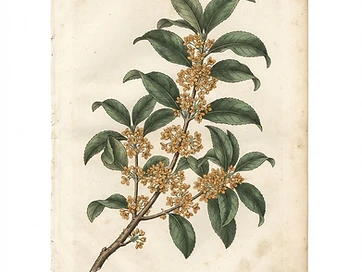
Osmanthus fragrans
Osmanthus
Oleaceae
Apricot, floral, sweet, buttery


Jasminum sambac
Jasmine
Oleaceae
Sweet, floral, heady, exotic


Olea europaea
Olive Leaf
Oleaceae
Mild, green, herbal, slightly astringent