
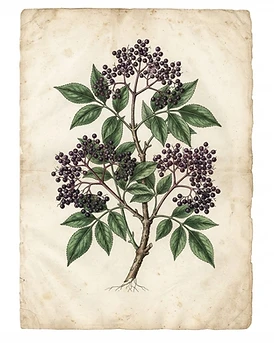
Sambucus nigra
Elderberry
Adoxaceae
Identity
- Common Name
- Elderberry
- Scientific Name
- Sambucus nigra
- Botanical Family
- Adoxaceae
- Native Region
- Europe, North Africa, western Asia
- Cultivation Regions
- Europe, North America
- Plant Parts Used
- Ripe berries (cooked), Flowers
- Synonyms
- European Elder, Black Elder
- Caffeine Level
- Caffeine Free
A large shrub or small tree 4–10 m tall with pinnate leaves, flat clusters of small cream-white flowers, and drooping bunches of small dark purple-black berries. Only the ripe, cooked berries and flowers are used; raw berries and other parts can cause nausea.
Historical Background
Elder has been a 'medicine chest' of European folk medicine for centuries, used for colds, fevers, and as a dyestuff. Hippocrates referred to the elder as his 'medicine chest,' and it was considered sacred in many European traditions. Elderberry syrup and flower tea remain staples of winter wellness.
Earliest recorded uses: Pliny and Dioscorides recorded elder's uses; widespread in European folk medicine for fevers and colds.
Cultural significance: In European folklore the elder was home to protective spirits — it was bad luck to cut one down. The flowers made elderflower champagne and fritters; the berries dyed cloth and were a winter food preserve.
Traditional preparations:
- Flower infusion
- Cooked berry syrup
- Elderflower cordial
Traditional Uses
These uses document historical traditions and do not imply proven effectiveness.
Traditional European Herbalism
Flower tea for inducing sweat in early colds; berry preparations for winter wellness.
Modern Herbalism
Elderberry syrup and extracts marketed for immune support during cold season.
Flavor & Aroma
Aroma: Sweet, floral, berry-like
Tea Information
Safety & Cautions
Research Summary
Elderberry has been studied for symptoms of the common cold and influenza. Some small trials suggest that elderberry extract started within the first day or two of symptoms may modestly shorten their duration, but evidence is limited and studies vary in quality. It is not a cure for colds or flu, and raw or underripe berries are unsafe. Most claims about elderberry and immunity are based on small studies rather than robust clinical evidence.
Evidence levels reflect the currently available scientific literature and may change as new research emerges. Where evidence is limited or conflicting, this is stated plainly.
References & Sources
Related Herbs


Sambucus nigra
Elderflower
Adoxaceae
Floral, sweet, slightly green, honeyed

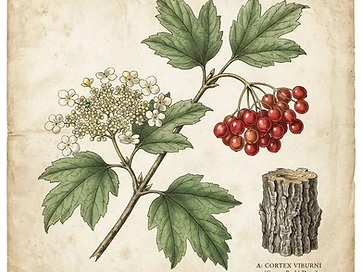
Viburnum opulus
Cramp Bark
Adoxaceae
Earthy, slightly bitter, woody

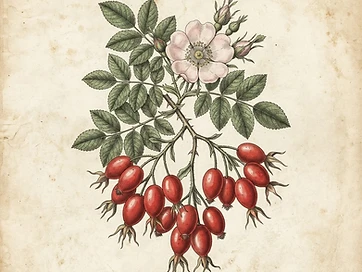
Rosa canina
Rose Hips
Rosaceae
Tart, fruity, slightly floral