
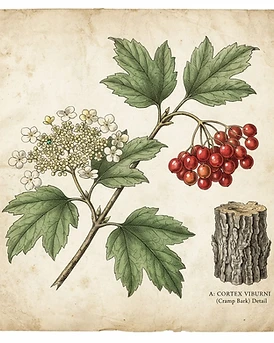
Viburnum opulus
Cramp Bark
Adoxaceae
Identity
- Common Name
- Cramp Bark
- Scientific Name
- Viburnum opulus
- Botanical Family
- Adoxaceae
- Native Region
- Europe, northern Asia, North America
- Cultivation Regions
- Europe, North America, northern Asia
- Plant Parts Used
- Bark
- Synonyms
- Guelder Rose, High Bush Cranberry, Snowball Tree
- Caffeine Level
- Caffeine Free
A deciduous shrub with broad three-lobed toothed maple-like leaves, flat clusters of small white flowers ringed by larger sterile outer blooms, and clusters of bright red berries; the grey-brown bark is the part used.
Historical Background
Cramp bark (guelder rose) has been used by Native American peoples and early American Eclectic physicians for centuries for muscle and menstrual comfort. Its grey-brown bark is decocted into a tea traditionally sipped for occasional cramping and tension.
Earliest recorded uses: Native American and early American Eclectic medicine for centuries; named for its traditional use for muscle and menstrual cramping.
Traditional preparations:
- Bark decoction
- Women's cramp tea with ginger
- Muscle-comfort blend
Traditional Uses
These uses document historical traditions and do not imply proven effectiveness.
Native American Traditions
Muscle and menstrual cramp comfort; uterine antispasmodic.
Modern Herbalism
Women's and muscle-comfort antispasmodic tea.
Flavor & Aroma
Aroma: Earthy, slightly bitter, woody
Tea Information
Safety & Cautions
Research Summary
Cramp bark has a tradition for muscle and menstrual comfort. Clinical evidence is insufficient; preclinical work suggests possible smooth-muscle relaxant activity, but it is not a treatment for dysmenorrhea, muscle spasm, or any condition, and should be discussed with a clinician.
Evidence levels reflect the currently available scientific literature and may change as new research emerges. Where evidence is limited or conflicting, this is stated plainly.
References & Sources
Related Herbs

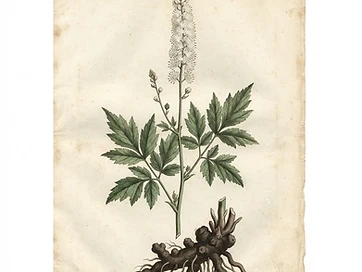
Actaea racemosa
Black Cohosh
Ranunculaceae
Earth, slightly bitter, green


Ptychopetalum olacoides
Muira Puama
Olacaceae
Earthy, woody, slightly bitter


Sambucus nigra
Elderberry
Adoxaceae
Sweet, floral, berry-like