
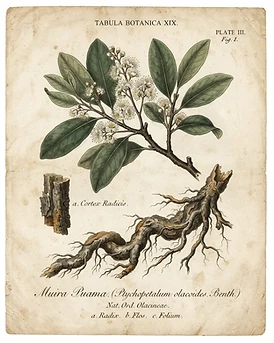
Ptychopetalum olacoides
Muira Puama
Olacaceae
Identity
- Common Name
- Muira Puama
- Scientific Name
- Ptychopetalum olacoides
- Botanical Family
- Olacaceae
- Native Region
- Amazon basin
- Cultivation Regions
- Amazon basin
- Plant Parts Used
- Bark, Roots
- Synonyms
- Potency Wood, Marapuama
- Caffeine Level
- Caffeine Free
A tropical shrub with leathery oblong evergreen leaves, small white flower clusters, and a gnarled brown root and gray-brown bark; the bark and roots are used.
Historical Background
Muira puama has been an Indigenous Amazonian 'potency wood' for centuries, its bark and roots brewed into a tonic tea for vitality, energy, and libido. A classic Brazilian tonic, it remains a caffeine-free adaptogen-style cup rooted in Amazonian tradition.
Earliest recorded uses: Indigenous Amazonian traditions for centuries; a vitality and tonic bark.
Traditional preparations:
- Bark/root decoction
- Vitality tonic tea
- Brazilian tonic cup
Traditional Uses
These uses document historical traditions and do not imply proven effectiveness.
Amazonian Traditions
Indigenous Amazonian vitality and tonic bark.
Modern Herbalism
Caffeine-free vitality and libido tonic.
Flavor & Aroma
Aroma: Earthy, woody, slightly bitter
Tea Information
Safety & Cautions
Research Summary
Muira puama has a tradition as a vitality, energy, and libido tonic; preclinical and small studies are limited and marketing claims outpace evidence. Clinical evidence is insufficient; it is not a treatment for erectile dysfunction, fatigue, depression, or any disease, though it remains a valued Amazonian tonic cup.
Evidence levels reflect the currently available scientific literature and may change as new research emerges. Where evidence is limited or conflicting, this is stated plainly.
References & Sources
Related Herbs

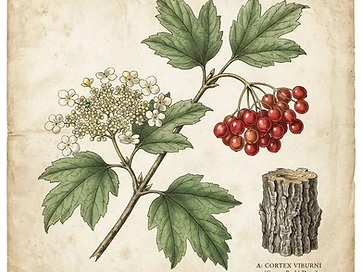
Viburnum opulus
Cramp Bark
Adoxaceae
Earthy, slightly bitter, woody


Salix alba
White Willow Bark
Salicaceae
Earthy, slightly bitter, woody, astringent

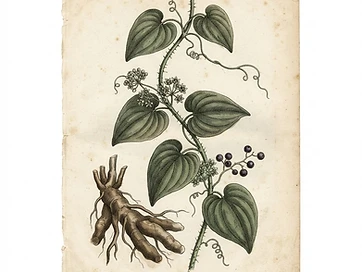
Smilax officinalis
Sarsaparilla
Smilacaceae
Earthy, sweet, slightly bitter, woody