
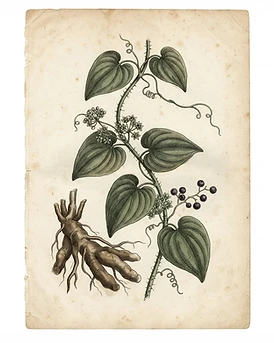
Smilax officinalis
Sarsaparilla
Smilacaceae
Identity
- Common Name
- Sarsaparilla
- Scientific Name
- Smilax officinalis
- Botanical Family
- Smilacaceae
- Native Region
- Central and South America, Caribbean
- Cultivation Regions
- Central America, South America, Caribbean, Mexico
- Plant Parts Used
- Root
- Synonyms
- Smilax, Jamaican Sarsaparilla, Honduran Sarsaparilla
- Caffeine Level
- Caffeine Free
A climbing woody vine with heart-shaped parallel-veined leaves and tendrils, small greenish-white flowers, and round dark berries; the thick starchy tuberous root is the part used.
Historical Background
Sarsaparilla has been used for centuries by Indigenous Mesoamerican and Caribbean peoples, and became a wildly popular tonic in 19th-century America and Europe. Its starchy, sweet-earthy root flavored the original 'root beer' and was brewed as a traditional vitality and joint tea.
Earliest recorded uses: Indigenous Mesoamerican and Caribbean traditions for centuries; a popular tonic in 19th-century American and European medicine.
Traditional preparations:
- Root decoction
- Traditional root-beer style tea
- Joint & vitality blend
Traditional Uses
These uses document historical traditions and do not imply proven effectiveness.
Indigenous Mesoamerican Traditions
Vitality, joint, and 'blood-purifying' tonic; flavoring for root beer.
Modern Herbalism
Vitality and joint-comfort tonic tea.
Flavor & Aroma
Aroma: Earthy, sweet, slightly bitter, woody
Tea Information
Safety & Cautions
Research Summary
Sarsaparilla has a long tradition as a vitality, joint, and digestive tonic. Clinical evidence is insufficient; preclinical work shows anti-inflammatory and antioxidant activity, but it is not a treatment for syphilis (historical), arthritis, or any disease.
Evidence levels reflect the currently available scientific literature and may change as new research emerges. Where evidence is limited or conflicting, this is stated plainly.
References & Sources
Related Herbs


Asparagus racemosus
Shatavari
Asparagaceae
Sweet, earthy, slightly bitter, herbal


Ptychopetalum olacoides
Muira Puama
Olacaceae
Earthy, woody, slightly bitter

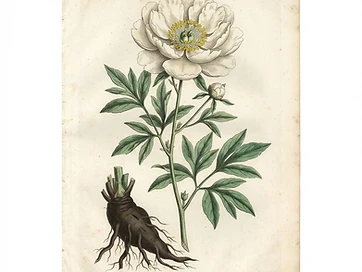
Paeonia lactiflora
White Peony
Paeoniaceae
Floral, sweet, slightly bitter, earthy