
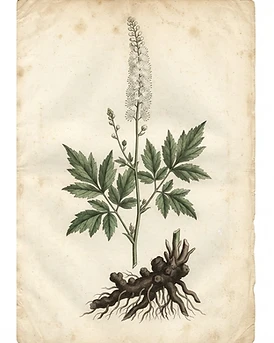
Actaea racemosa
Black Cohosh
Ranunculaceae
Identity
- Common Name
- Black Cohosh
- Scientific Name
- Actaea racemosa
- Botanical Family
- Ranunculaceae
- Native Region
- Eastern North America
- Cultivation Regions
- Eastern North America, Europe (cultivated)
- Plant Parts Used
- Rhizome, Root
- Synonyms
- Cimicifuga, Black Bugbane, Black Snakeroot
- Caffeine Level
- Caffeine Free
A tall woodland perennial with deeply divided toothed leaves and a long slender wand of fluffy white feathery flower spikes; the thick dark knobby rhizome is medicinal.
Historical Background
Black cohosh (black bugbane) has been used by Native American peoples of eastern North America for centuries for women's and rheumatic concerns, later carried into 19th-century Eclectic medicine. Its knobby root is decocted for a respected but cautionary place in women's herbalism.
Earliest recorded uses: Native American traditions for centuries; adopted into 19th-century Eclectic medicine as a women's herb.
Traditional preparations:
- Root decoction
- Women's formula with dong quai
- Short-term menopausal tea
Traditional Uses
These uses document historical traditions and do not imply proven effectiveness.
Native American Traditions
Women's health and rheumatic comfort root decoction.
Modern Herbalism
Menopausal and women's nervine tonic.
Flavor & Aroma
Aroma: Earth, slightly bitter, green
Tea Information
Safety & Cautions
Research Summary
Black cohosh has a tradition for menopausal symptoms; trial results are mixed and inconclusive, and rare serious liver injury has been reported. It is not a treatment for menopause, PMS, or any disease and should be used only with clinician guidance and liver monitoring.
Evidence levels reflect the currently available scientific literature and may change as new research emerges. Where evidence is limited or conflicting, this is stated plainly.
References & Sources
Related Herbs


Hydrastis canadensis
Goldenseal
Ranunculaceae
Bitter, earthy, slightly astringent

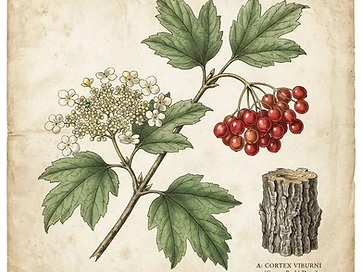
Viburnum opulus
Cramp Bark
Adoxaceae
Earthy, slightly bitter, woody


Gymnema sylvestre
Gymnema
Apocynaceae
Earthy, slightly bitter, green