
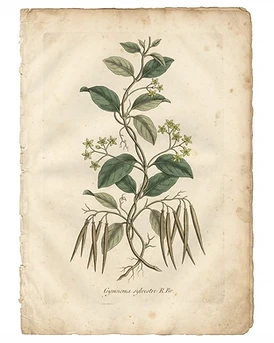
Gymnema sylvestre
Gymnema
Apocynaceae
Identity
- Common Name
- Gymnema
- Scientific Name
- Gymnema sylvestre
- Botanical Family
- Apocynaceae
- Native Region
- India and tropical Asia
- Cultivation Regions
- India, Southeast Asia, Africa
- Plant Parts Used
- Leaves
- Synonyms
- Gurmar, Sugar Destroyer, Gurmarbooti
- Caffeine Level
- Caffeine Free
A climbing woody vine with opposite oval leaves and small yellow-green five-petalled flowers in loose clusters, followed by elongated narrow seed pods; the leaves are the part used.
Historical Background
Gymnema (gurmar, 'sugar destroyer') has been a celebrated Ayurvedic herb for centuries, traditionally used for blood sugar support. Its leaves famously temporarily mask the taste of sweetness on the tongue, a curiosity that gave it its name and inspired modern study.
Earliest recorded uses: Ayurvedic medicine for centuries; called 'gurmar' (sugar destroyer) for its effect on the taste of sweetness.
Traditional preparations:
- Leaf infusion
- Bitter blood-sugar tea
- Ayurvedic metabolic blend
Traditional Uses
These uses document historical traditions and do not imply proven effectiveness.
Ayurveda
Blood-sugar support and 'sugar-destroying' tonic.
Modern Herbalism
Metabolic and sugar-support tea.
Flavor & Aroma
Aroma: Earthy, slightly bitter, green
Tea Information
Safety & Cautions
Research Summary
Gymnema has a tradition for blood sugar support; small trials suggest modest effects, but evidence is limited and it is not a treatment for diabetes. Anyone with diabetes should discuss use with their clinician to avoid hypoglycemia and adjust medication.
Evidence levels reflect the currently available scientific literature and may change as new research emerges. Where evidence is limited or conflicting, this is stated plainly.
References & Sources
Related Herbs


Terminalia chebula
Haritaki
Combretaceae
Astringent, slightly sour, earthy, green

Eclipta prostrata
Bhringraj
Asteraceae
Mild, slightly bitter, green


Tribulus terrestris
Tribulus
Zygophyllaceae
Mild, slightly bitter, green