

Tribulus terrestris
Tribulus
Zygophyllaceae
Identity
- Common Name
- Tribulus
- Scientific Name
- Tribulus terrestris
- Botanical Family
- Zygophyllaceae
- Native Region
- India, Mediterranean, and warm temperate regions
- Cultivation Regions
- India, Eastern Europe, Mediterranean, Australia
- Plant Parts Used
- Fruit, Root
- Synonyms
- Gokshura, Puncture Vine, Caltrop
- Caffeine Level
- Caffeine Free
A prostrate spreading annual with pinnate feathery leaves of small leaflets, small yellow five-petalled flowers, and a spiny hard woody fruit capsule with sharp spike-like projections; the fruit and root are used.
Historical Background
Tribulus (gokshura, puncture vine) has been used in Ayurvedic and Chinese medicine for centuries as a vitality and urinary tonic. Its spiny fruits are brewed into teas traditionally associated with men's and women's wellness and athletic traditions.
Earliest recorded uses: Ayurvedic and Traditional Chinese Medicine for centuries; a traditional vitality and urinary tonic (gokshura).
Traditional preparations:
- Fruit decoction
- Vitality blend with ashwagandha
- Urinary tonic
Traditional Uses
These uses document historical traditions and do not imply proven effectiveness.
Ayurveda
Vitality, urinary, and men's wellness tonic (gokshura).
Modern Herbalism
Vitality and urinary-comfort tea.
Flavor & Aroma
Aroma: Mild, slightly bitter, green
Tea Information
Safety & Cautions
Research Summary
Tribulus has a tradition for vitality and urinary support; trial evidence is limited and conflicting, with no reliable benefit for testosterone or sexual function in healthy adults. It is not a treatment for ED, infertility, or any disease; discuss with a clinician given hormonal effects.
Evidence levels reflect the currently available scientific literature and may change as new research emerges. Where evidence is limited or conflicting, this is stated plainly.
References & Sources
Related Herbs

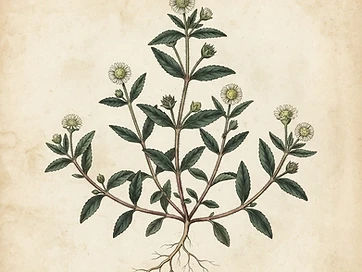
Eclipta prostrata
Bhringraj
Asteraceae
Mild, slightly bitter, green


Viscum album
Mistletoe
Santalaceae
Mild, slightly bitter, green


Prunella vulgaris
Self-Heal
Lamiaceae
Mild, slightly bitter, green, earthy