
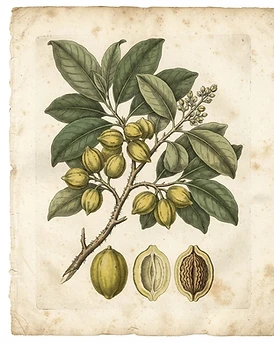
Terminalia chebula
Haritaki
Combretaceae
Identity
- Common Name
- Haritaki
- Scientific Name
- Terminalia chebula
- Botanical Family
- Combretaceae
- Native Region
- India and South Asia
- Cultivation Regions
- India, Southeast Asia, Sri Lanka
- Plant Parts Used
- Fruit
- Synonyms
- Chebulic Myrobalan, Harad, Kadukkai
- Caffeine Level
- Caffeine Free
A large deciduous tree with large oval leathery leaves arranged in whorls at the branch tips and clusters of oval yellow-green ribbed drupe fruits; the dried fruit is the part used.
Historical Background
Haritaki (chebulic myrobalan) is revered in Ayurveda and Tibetan medicine as the 'king of medicines,' a key ingredient of Triphala. Its astringent, ribbed fruit is decocted for digestive and detoxifying teas, and holds a sacred place in Himalayan healing.
Earliest recorded uses: Used in Ayurvedic medicine for millennia; the 'king of medicines' in Tibetan tradition and a key Triphala fruit.
Traditional preparations:
- Fruit decoction
- Triphala tea (with amla & bibhitaki)
- Digestive & detox blend
Traditional Uses
These uses document historical traditions and do not imply proven effectiveness.
Ayurveda
'King of medicines'; digestive, detoxifying, and longevity fruit.
Modern Herbalism
Digestive and detox tonic.
Flavor & Aroma
Aroma: Astringent, slightly sour, earthy, green
Tea Information
Safety & Cautions
Research Summary
Haritaki has a long Ayurvedic tradition as a digestive and detoxifying herb and a Triphala component. Preclinical work shows antioxidant and anti-inflammatory activity, but clinical evidence is limited and it is not a treatment for constipation, liver disease, or any condition.
Evidence levels reflect the currently available scientific literature and may change as new research emerges. Where evidence is limited or conflicting, this is stated plainly.
References & Sources
Related Herbs


Gymnema sylvestre
Gymnema
Apocynaceae
Earthy, slightly bitter, green

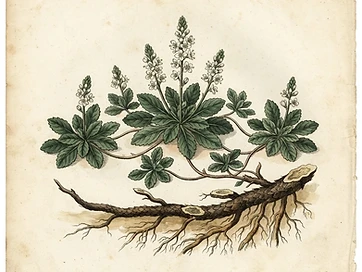
Picrorhiza kurroa
Picrorhiza
Plantaginaceae
Very bitter, earthy, slightly acrid

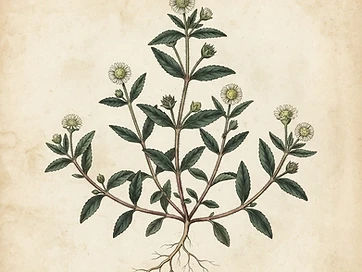
Eclipta prostrata
Bhringraj
Asteraceae
Mild, slightly bitter, green