
Picrorhiza kurroa
Picrorhiza
Plantaginaceae
Identity
- Common Name
- Picrorhiza
- Scientific Name
- Picrorhiza kurroa
- Botanical Family
- Plantaginaceae
- Native Region
- High Himalayas (India, Nepal, Tibet)
- Cultivation Regions
- Himalayas (India, Nepal, Tibet), Pakistan
- Plant Parts Used
- Root (rhizome)
- Synonyms
- Kutki, Katuka, Indian Gentian
- Caffeine Level
- Caffeine Free
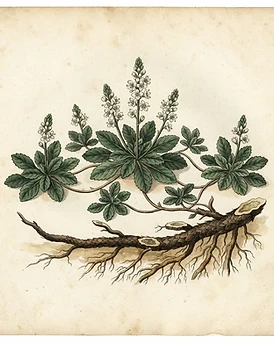
A low creeping alpine perennial with small toothed oval leaves growing in rosettes, a short spike of small white flowers, and a long thin woody rhizome with a bitter root, the part used.
Historical Background
Picrorhiza (kutki) is a bitter Himalayan root prized in Ayurveda for liver and digestive support. The high-altitude alpine grows slowly, and wild populations are now endangered, making cultivated sources essential. Its very bitter root is decocted into tonic teas.
Earliest recorded uses: Used in Ayurvedic medicine for millennia; a bitter liver and digestive herb (kutki); endangered in the wild.
Traditional preparations:
- Root decoction
- Liver-support blend
- Bitter digestive tea
Traditional Uses
These uses document historical traditions and do not imply proven effectiveness.
Ayurveda
Bitter liver and digestive tonic (kutki).
Modern Herbalism
Liver and digestive bitter tea.
Flavor & Aroma
Aroma: Very bitter, earthy, slightly acrid
Tea Information
Safety & Cautions
Research Summary
Picrorhiza has a long Ayurvedic tradition as a liver and digestive herb. Preclinical work shows hepatoprotective and antioxidant activity, but clinical evidence is insufficient; it is not a treatment for hepatitis, liver disease, or any condition. Wild sources are endangered — choose cultivated.
Evidence levels reflect the currently available scientific literature and may change as new research emerges. Where evidence is limited or conflicting, this is stated plainly.
References & Sources
Related Herbs


Bacopa monnieri
Brahmi (Bacopa)
Plantaginaceae
Bitter, earthy, green, slightly buttery

Plantago major
Plantain
Plantaginaceae
Faint green and mineral


Terminalia chebula
Haritaki
Combretaceae
Astringent, slightly sour, earthy, green