
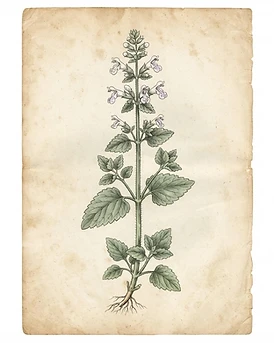
Nepeta cataria
Catnip
Lamiaceae
Identity
- Common Name
- Catnip
- Scientific Name
- Nepeta cataria
- Botanical Family
- Lamiaceae
- Native Region
- Europe, Asia (temperate)
- Cultivation Regions
- Europe, Asia, North America
- Plant Parts Used
- Leaves, Flowering tops
- Synonyms
- Catmint, Catnep, Field Balm
- Caffeine Level
- Caffeine Free
A perennial herb 50-100 cm tall with branching square grey-green stems, heart-shaped toothed aromatic leaves in opposite pairs, and loose spikes of small white (sometimes purple-tinged) two-lipped tubular flowers.
Historical Background
Catnip has been a familiar European cottage-garden herb for centuries, used as a gentle calming tea for restless children, colds, and upset stomach. Its famous effect on cats (nepetalactone) made it equally well known as a feline tonic, while humans relied on its milder nervine reputation.
Earliest recorded uses: European and Asian folk use for centuries; introduced to North America and adopted by Native American traditions.
Traditional preparations:
- Leaf infusion
- Honey-sweetened children's tea
Traditional Uses
These uses document historical traditions and do not imply proven effectiveness.
Traditional European Herbalism
Calming tea for restlessness, mild colds, and children's teething/colic.
Modern Herbalism
Gentle nervine and digestive infusion.
Flavor & Aroma
Aroma: Minty, green, mild, slightly musky
Tea Information
Safety & Cautions
Research Summary
Catnip has a long folk tradition as a calming nervine and gentle digestive, especially for children. Clinical evidence is insufficient; no robust human trials confirm specific effects, and it is not a treatment for anxiety or insomnia.
Evidence levels reflect the currently available scientific literature and may change as new research emerges. Where evidence is limited or conflicting, this is stated plainly.
References & Sources
Related Herbs


Scutellaria lateriflora
Skullcap
Lamiaceae
Mild, green, slightly bitter, earthy

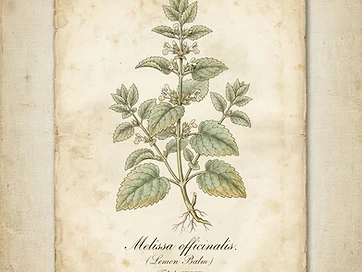
Melissa officinalis
Lemon Balm
Lamiaceae
Bright, lemony, herbaceous.

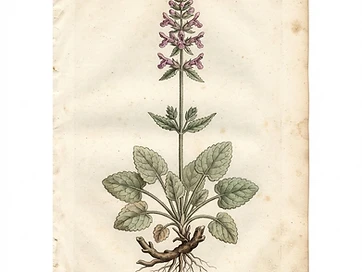
Stachys officinalis
Wood Betony
Lamiaceae
Mild, herbal, slightly bitter, green