
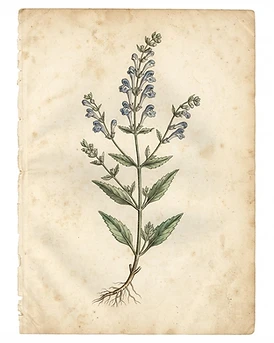
Scutellaria lateriflora
Skullcap
Lamiaceae
Identity
- Common Name
- Skullcap
- Scientific Name
- Scutellaria lateriflora
- Botanical Family
- Lamiaceae
- Native Region
- North America
- Cultivation Regions
- North America, Europe
- Plant Parts Used
- Aerial parts, Leaves, Flowering tops
- Synonyms
- American Skullcap, Mad Dog Skullcap, Hoodwort
- Caffeine Level
- Caffeine Free
A slender branching square-stemmed perennial 30-80 cm tall with opposite lance-shaped toothed leaves and loose one-sided racemes of small two-lipped blue-violet flowers whose upper lip forms a hooded 'helmet' (scutella).
Historical Background
Skullcap has been a cherished nervine of North American Eclectic and Indigenous herbal traditions, used to calm tension, restlessness, and troubled sleep. The 'scutellum' helmet shape of the flower inspired the genus name and its long association with easing the mind.
Earliest recorded uses: Native American (Eclectic) and early American herbal traditions as a nervine tonic.
Traditional preparations:
- Aerial-part infusion
- Nervine tonic blend
- Tincture (off-tea)
Traditional Uses
These uses document historical traditions and do not imply proven effectiveness.
Native American Traditions
Calming nervine for nervous tension, restlessness, and sleep.
Modern Herbalism
Nervine relaxant for stress and mild anxiety.
Flavor & Aroma
Aroma: Mild, green, slightly bitter, earthy
Tea Information
Safety & Cautions
Research Summary
Skullcap has a strong folk tradition as a calming nervine for tension and sleep. Clinical evidence is insufficient; no robust trials confirm specific effects, and historical liver-injury reports were largely from adulteration. It is not a treatment for anxiety or insomnia.
Evidence levels reflect the currently available scientific literature and may change as new research emerges. Where evidence is limited or conflicting, this is stated plainly.
References & Sources
Related Herbs


Leonurus cardiaca
Motherwort
Lamiaceae
Herbal, slightly bitter, green, earthy

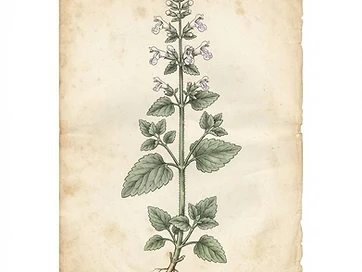
Nepeta cataria
Catnip
Lamiaceae
Minty, green, mild, slightly musky


Scutellaria baicalensis
Baikal Skullcap
Lamiaceae
Mild, slightly bitter, green, earthy