
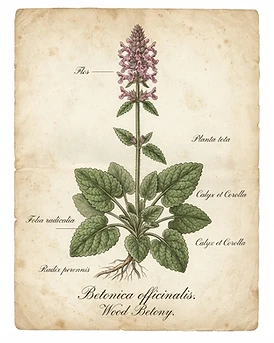
Betonica officinalis
Wood Betony
Lamiaceae
Identity
- Common Name
- Wood Betony
- Scientific Name
- Betonica officinalis
- Botanical Family
- Lamiaceae
- Native Region
- Europe
- Cultivation Regions
- Europe, Western Asia
- Plant Parts Used
- Aerial parts
- Synonyms
- Betonica, Stachys officinalis, Bishopwort
- Caffeine Level
- Caffeine Free
A perennial with a basal rosette of wrinkled heart-shaped leaves and a dense square spike of small tubular magenta-pink flowers, characteristic of the mint family.
Historical Background
Anglo-Saxons listed wood betony among their most sacred herbs, and medieval physicians prescribed it for headaches, nerves, and digestion. Antonius Musa claimed it cured 47 diseases.
Earliest recorded uses: Headache, nervous tension, digestive weakness, and as a general tonic.
Cultural significance: 'Sell your coat and buy betony' was an old European saying attesting to its revered status.
Anglo-Saxon
Revered among sacred herbs; used for head and nerve complaints.
Medieval
Monastery gardens grow betony as a near-panacea.
Traditional preparations:
- Infusion
- Tincture
Traditional Uses
These uses document historical traditions and do not imply proven effectiveness.
Traditional European Herbalism
Infusion for headache, nervous tension, and mild digestive discomfort; as a gentle nerve tonic.
Flavor & Aroma
Aroma: Mild, green and herbaceous
Tea Information
Safety & Cautions
Research Summary
Tannins and stachydrine are noted; modern clinical evidence for headache and nerve uses is lacking.
Evidence levels reflect the currently available scientific literature and may change as new research emerges. Where evidence is limited or conflicting, this is stated plainly.
References & Sources
References & Sources
- Maud Grieve · A Modern Herbal (historical reference) (1931)
Related Herbs


Ballota nigra
Black Horehound
Lamiaceae
Strong, unpleasant, herbaceous

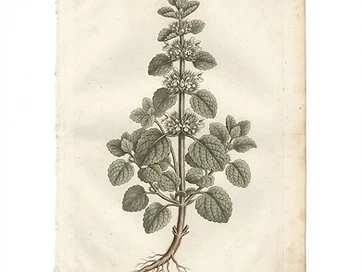
Marrubium vulgare
Horehound
Lamiaceae
Bitter, earthy, menthol-like, herbaceous


Thymus vulgaris
Thyme
Lamiaceae
Strong, herbaceous, thymol