
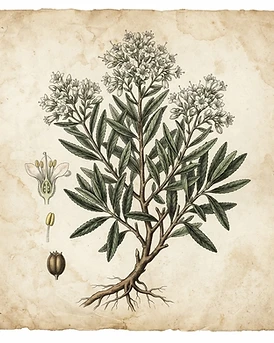
Eriodictyon californicum
Yerba Santa
Boraginaceae
Identity
- Common Name
- Yerba Santa
- Scientific Name
- Eriodictyon californicum
- Botanical Family
- Boraginaceae
- Native Region
- Western North America (California, Oregon)
- Cultivation Regions
- California, Oregon, Baja California
- Plant Parts Used
- Leaves
- Synonyms
- Holy Herb, Mountain Balm, Bear's Weed
- Caffeine Level
- Caffeine Free
A shrub of the western American hills with narrow lance-shaped leathery leaves coated in a sticky resin, and clusters of small white bell-shaped flowers; the leaves are the part used.
Historical Background
Yerba santa ('holy herb') is a resinous-leaved shrub of California's hills, cherished by Indigenous peoples — Chumash, Cahuilla, Miwok — for respiratory and digestive comfort. Spanish missionaries adopted its name, and its sticky leaves remain a valued respiratory tea and syrup herb.
Earliest recorded uses: Indigenous Californian (Chumash, Cahuilla, Miwok) traditions for centuries; Spanish settlers translated its name to 'holy herb.'
Traditional preparations:
- Leaf infusion
- Respiratory tea with mullein & licorice
- Soothing syrup (off-tea)
Traditional Uses
These uses document historical traditions and do not imply proven effectiveness.
Indigenous Traditions
Respiratory, expectorant, and digestive comfort herb.
Modern Herbalism
Respiratory and soothing tea.
Flavor & Aroma
Aroma: Resinous, earthy, slightly bitter, green
Tea Information
Safety & Cautions
Research Summary
Yerba santa has a long Indigenous tradition for respiratory and digestive comfort. Clinical evidence is insufficient; preclinical work shows antioxidant and expectorant activity, but it is not a treatment for asthma, cough, infection, or any disease.
Evidence levels reflect the currently available scientific literature and may change as new research emerges. Where evidence is limited or conflicting, this is stated plainly.
References & Sources
Related Herbs


Symphytum officinale
Comfrey
Boraginaceae
Mild, slightly cucumber-like, green, earthy

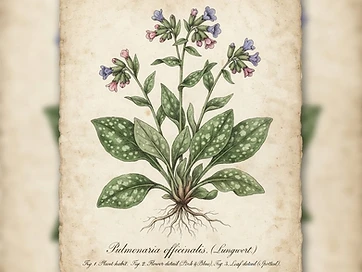
Pulmonaria officinalis
Lungwort
Boraginaceae
Faint, green and earthy

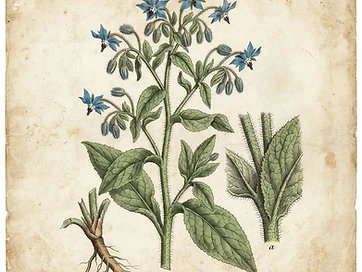
Borago officinalis
Borage
Boraginaceae
Mild, slightly cucumber-like, green, floral