
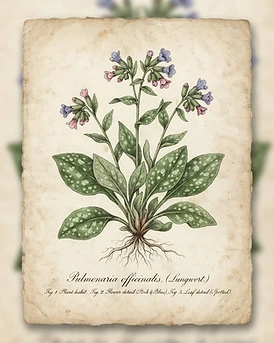
Pulmonaria officinalis
Lungwort
Boraginaceae
Identity
- Common Name
- Lungwort
- Scientific Name
- Pulmonaria officinalis
- Botanical Family
- Boraginaceae
- Native Region
- Europe
- Cultivation Regions
- Europe, North America (shade gardens)
- Plant Parts Used
- Aerial parts
- Synonyms
- Spotted Lungwort, Jerusalem Cowslip, Soldiers and Sailors
- Caffeine Level
- Caffeine Free
A low clumping perennial with broad oval green leaves mottled with silvery-white spots, and small hanging tubular flowers that shift from pink to blue. The spotted leaves inspired the 'doctrine of signatures' for the lungs.
Historical Background
Named for its lung-like spotted leaves, lungwort was a classic European remedy for chest complaints and coughs under the doctrine of signatures.
Earliest recorded uses: Coughs, chest congestion, and respiratory soothing.
Cultural significance: A beloved shade-garden plant whose folk name preserves its once-central role in chest medicine.
Renaissance
European herbalists prescribe lungwort for chest ailments by signatures.
Modern
Fades from clinical use; retained in cottage gardens and mild tea blends.
Traditional preparations:
- Infusion
Traditional Uses
These uses document historical traditions and do not imply proven effectiveness.
Traditional European Herbalism
Leaf infusion as a gentle respiratory tonic for cough and chest catarrh.
Flavor & Aroma
Aroma: Faint, green and earthy
Tea Information
Safety & Cautions
Research Summary
Mucilage and tannins support its traditional demulcent use; modern clinical evidence is lacking.
Evidence levels reflect the currently available scientific literature and may change as new research emerges. Where evidence is limited or conflicting, this is stated plainly.
References & Sources
References & Sources
- American Herbal Products Association · Botanical Safety Handbook (2013)
Related Herbs

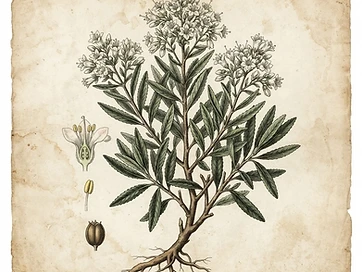
Eriodictyon californicum
Yerba Santa
Boraginaceae
Resinous, earthy, slightly bitter, green

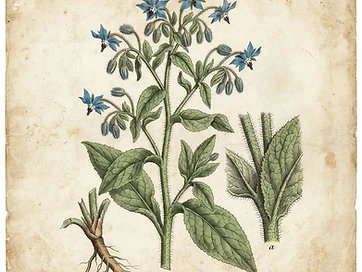
Borago officinalis
Borage
Boraginaceae
Mild, slightly cucumber-like, green, floral

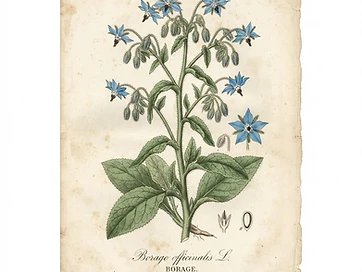
Borago officinalis
Borage
Boraginaceae
Cool, cucumber-like, fresh