

Borago officinalis
Borage
Boraginaceae
Identity
- Common Name
- Borage
- Scientific Name
- Borago officinalis
- Botanical Family
- Boraginaceae
- Native Region
- Mediterranean
- Cultivation Regions
- Europe, North America, Worldwide temperate
- Plant Parts Used
- Leaves, Flowers, Seed oil
- Synonyms
- Starflower, Bee Plant, Tailor's Weed
- Caffeine Level
- Caffeine Free
A leafy annual with large oval rough hairy leaves and drooping clusters of vivid blue five-petalled star flowers with prominent black stamens. Both flowers and leaves are used.
Historical Background
Borage was the emblem of courage — 'I, borage, give courage' — used in medieval European cordials to lift the spirits and support the adrenal system. The seed oil later became a source of GLA.
Earliest recorded uses: Courage and mood, fever, mild respiratory and skin complaints.
Cultural significance: Strewed in taverns and stirred into 'cooling' summer cups; flowers candied and floated in drinks.
Classical
Pliny and Dioscorides describe borage for courage and mood.
Modern
Seed oil (PA-free) becomes a GLA supplement.
Traditional preparations:
- Fresh leaf infusion
- Flower garnish
- Candied flowers
Traditional Uses
These uses document historical traditions and do not imply proven effectiveness.
Traditional European Herbalism
Leaf infusion as a mild diaphoretic and 'cordial' for mood and the adrenal system; flowers as a garnish.
Flavor & Aroma
Aroma: Cool, cucumber-like, fresh
Tea Information
Safety & Cautions
Research Summary
Seed oil provides GLA (anti-inflammatory interest); the leaf's traditional use is discouraged internally due to pyrrolizidine alkaloids. Clinical evidence for mood and adrenal outcomes is limited.
Evidence levels reflect the currently available scientific literature and may change as new research emerges. Where evidence is limited or conflicting, this is stated plainly.
References & Sources
References & Sources
- American Herbal Products Association · Botanical Safety Handbook (PA-containing herbs) (2013)
- American Botanical Council · Expanded Commission E Monographs (2000)
Related Herbs

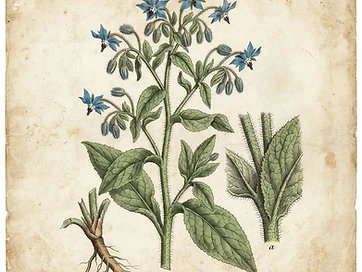
Borago officinalis
Borage
Boraginaceae
Mild, slightly cucumber-like, green, floral

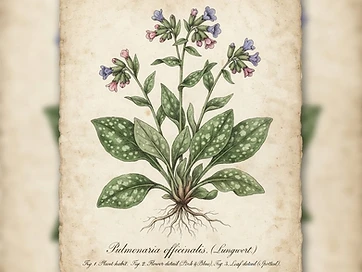
Pulmonaria officinalis
Lungwort
Boraginaceae
Faint, green and earthy

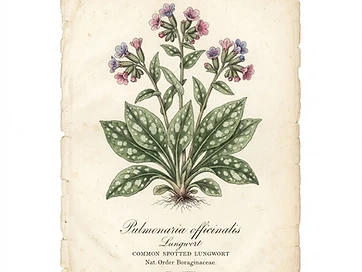
Pulmonaria officinalis
Lungwort
Boraginaceae
Mild, green, slightly earthy, delicate