
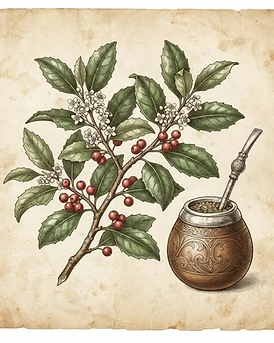
Ilex paraguariensis
Yerba Mate
Aquifoliaceae
Identity
- Common Name
- Yerba Mate
- Scientific Name
- Ilex paraguariensis
- Botanical Family
- Aquifoliaceae
- Native Region
- South America (Paraná basin)
- Cultivation Regions
- Argentina, Brazil, Paraguay, Uruguay
- Plant Parts Used
- Leaves, Twigs
- Synonyms
- Mate, Ilex Paraguariensis, Paraguay Tea
- Caffeine Level
- Caffeinated (moderate-high)
An evergreen tree or large shrub with glossy serrated oval leaves, small white clustered flowers, and red berries; the dried leaves and twigs are prepared as the traditional South American infusion.
Historical Background
Yerba mate has been the soul of South American daily life since Guaraní times, shared in a hollowed gourd through a silver bombilla as a sign of friendship and community. Its earthy, smoky, caffeinated infusion is woven into the culture of Argentina, Paraguay, Uruguay, and southern Brazil.
Earliest recorded uses: Guaraní and other Indigenous South American peoples for centuries; a symbol of friendship and daily social ritual.
Traditional preparations:
- Gourd and bombilla infusion
- Cebador ritual
- Tereré (cold iced mate)
Traditional Uses
These uses document historical traditions and do not imply proven effectiveness.
Indigenous South American Traditions
Daily social stimulant tea; shared ritual of friendship.
Modern Herbalism
Caffeinated focus and energy tea.
Flavor & Aroma
Aroma: Herbal, smoky, grassy, slightly bitter
Tea Information
Safety & Cautions
Research Summary
Yerba mate contains caffeine and antioxidants and is a traditional stimulant and social drink. Some observational studies link very hot, prolonged consumption to increased upper-digestive cancer risk, though confounders exist. It is not a treatment for fatigue, obesity, or any disease; moderate intake is advised.
Evidence levels reflect the currently available scientific literature and may change as new research emerges. Where evidence is limited or conflicting, this is stated plainly.
References & Sources
Related Herbs


Ilex guayusa
Guayusa
Aquifoliaceae
Smooth, slightly sweet, earthy, grassy


Ilex vomitoria
Yaupon Holly
Aquifoliaceae
Earthy, lightly sweet, tea-like


Uncaria tomentosa
Cat's Claw
Rubiaceae
Woody, earthy, slightly bitter, herbal