
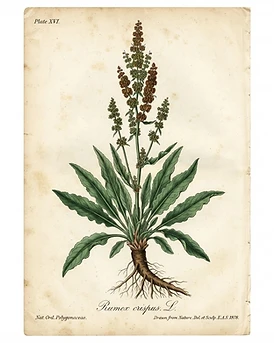
Rumex crispus
Yellow Dock
Polygonaceae
Identity
- Common Name
- Yellow Dock
- Scientific Name
- Rumex crispus
- Botanical Family
- Polygonaceae
- Native Region
- Europe and western Asia
- Cultivation Regions
- Europe, North America, temperate regions
- Plant Parts Used
- Root
- Synonyms
- Curly Dock, Sour Dock, Narrow Dock
- Caffeine Level
- Caffeine Free
A tall perennial with long lanceolate wavy-margined green leaves, a tall stalk of small green-brown flowers turning to rusty-brown seed clusters, and a thick deep taproot; the root is used.
Historical Background
Yellow dock has been a European and Native American folk herb for centuries, its deep taproot brewed into a bitter 'blood-purifying' and liver-support tea. Traditionally associated with gentle iron and skin traditions, it remains a mild, earthy, caffeine-free cup in folk practice.
Earliest recorded uses: European and Native American traditions for centuries; a bitter 'blood-purifying' and liver root.
Traditional preparations:
- Root decoction
- Bitter liver and skin tea
- Gentle detox cup
Traditional Uses
These uses document historical traditions and do not imply proven effectiveness.
European Folk Traditions
Bitter 'blood-purifying' and liver root.
Modern Herbalism
Gentle iron and skin tonic cup.
Flavor & Aroma
Aroma: Earthy, slightly sour, tannic, dry
Tea Information
Safety & Cautions
Research Summary
Yellow dock has a tradition as a bitter liver, 'blood-purifying,' and skin root tea; preclinical work shows mild laxative and antioxidant activity. Clinical evidence is insufficient; it is not a treatment for anemia, constipation, skin disease, or any disease, though it remains a gentle, earthy folk cup. Note high oxalate content.
Evidence levels reflect the currently available scientific literature and may change as new research emerges. Where evidence is limited or conflicting, this is stated plainly.
References & Sources
Related Herbs


Polygonum multiflorum
Fo-Ti
Polygonaceae
Earthy, slightly bitter, starchy, mild

Rumex acetosa
Sorrel
Polygonaceae
Tart, lemony, bright, green

Gentiana lutea
Gentian
Gentianaceae
Intensely bitter, earthy, dry