
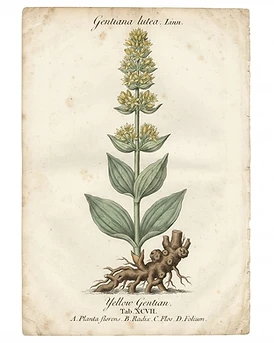
Gentiana lutea
Gentian
Gentianaceae
Identity
- Common Name
- Gentian
- Scientific Name
- Gentiana lutea
- Botanical Family
- Gentianaceae
- Native Region
- European mountains
- Cultivation Regions
- European mountains, temperate mountains
- Plant Parts Used
- Root
- Synonyms
- Yellow Gentian, Bitter Root, Gentian Root
- Caffeine Level
- Caffeine Free
A tall perennial with large paired lanceolate blue-green leaves and a sturdy vertical spike of small pale yellow flowers, and a thick knobby brown root; the root is used.
Historical Background
Gentian has been a European bitter tonic since antiquity, its intensely bitter root sipped in small doses before meals to kindle digestion. Named after Gentius, an Illyrian king said to have discovered its virtues, it remains the classic bitter digestive cup and the basis of many traditional bitters and liqueurs.
Earliest recorded uses: European traditions since antiquity; a premier bitter digestive tonic.
Traditional preparations:
- Small-dose root infusion
- Pre-meal bitter tonic
- Bitter digestive cup
Traditional Uses
These uses document historical traditions and do not imply proven effectiveness.
European Traditions
Premier bitter digestive tonic (bitter reflex).
Modern Herbalism
Classic pre-meal bitter cup.
Flavor & Aroma
Aroma: Intensely bitter, earthy, dry
Tea Information
Safety & Cautions
Research Summary
Gentian has a tradition as a premier bitter digestive, stimulating saliva, gastric juice, and appetite (the 'bitter reflex'); preclinical and small studies support its digestive-stimulant activity. Clinical evidence is limited; it is not a treatment for indigestion, anorexia, or any disease, though it remains the classic pre-meal bitter cup.
Evidence levels reflect the currently available scientific literature and may change as new research emerges. Where evidence is limited or conflicting, this is stated plainly.
References & Sources
Related Herbs

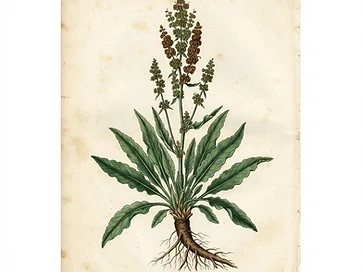
Rumex crispus
Yellow Dock
Polygonaceae
Earthy, slightly sour, tannic, dry
Centaurium erythraea
Centaury
Gentianaceae
Mild, green, faintly bitter


Verbena hastata
Blue Vervain
Verbenaceae
Herbal, slightly bitter, green, earthy