

Verbena hastata
Blue Vervain
Verbenaceae
Identity
- Common Name
- Blue Vervain
- Scientific Name
- Verbena hastata
- Botanical Family
- Verbenaceae
- Native Region
- North America and Europe
- Cultivation Regions
- North America, Europe, Asia
- Plant Parts Used
- Aerial parts
- Synonyms
- American Vervain, Simpler's Joy, Wild Hyssop
- Caffeine Level
- Caffeine Free
An erect slender perennial 50-150 cm tall with toothed lance-shaped leaves and tall thin spikes of tiny blue-violet five-petalled flowers; the aerial parts are the part used.
Historical Background
Blue vervain has been a sacred herb of European and Native American traditions for centuries, used in rituals and as a nervine and digestive. The Celts and Druids called it 'enchanter's plant,' and its airy blue flower spikes remain a gentle calming herb in modern practice.
Earliest recorded uses: Used in European and Native American traditions for centuries; a sacred nervine and digestive herb.
Traditional preparations:
- Aerial-part infusion
- Nervine blend with skullcap & lemon balm
- Bitter digestive tea
Traditional Uses
These uses document historical traditions and do not imply proven effectiveness.
Traditional European Herbalism
Sacred nervine, calming, and digestive herb; ritual plant.
Modern Herbalism
Calming nervine and gentle digestive tonic.
Flavor & Aroma
Aroma: Herbal, slightly bitter, green, earthy
Tea Information
Safety & Cautions
Research Summary
Blue vervain has a tradition as a calming nervine and digestive. Clinical evidence is insufficient; preclinical work shows mild relaxing and anti-inflammatory activity, but it is not a treatment for anxiety, insomnia, depression, or any disease.
Evidence levels reflect the currently available scientific literature and may change as new research emerges. Where evidence is limited or conflicting, this is stated plainly.
References & Sources
Related Herbs

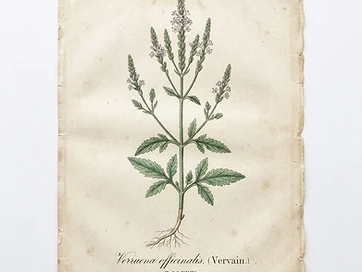
Verbena officinalis
Vervain
Verbenaceae
Faint, green and herbaceous


Leonurus cardiaca
Motherwort
Lamiaceae
Herbal, slightly bitter, green, earthy

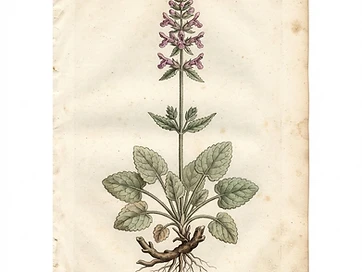
Stachys officinalis
Wood Betony
Lamiaceae
Mild, herbal, slightly bitter, green